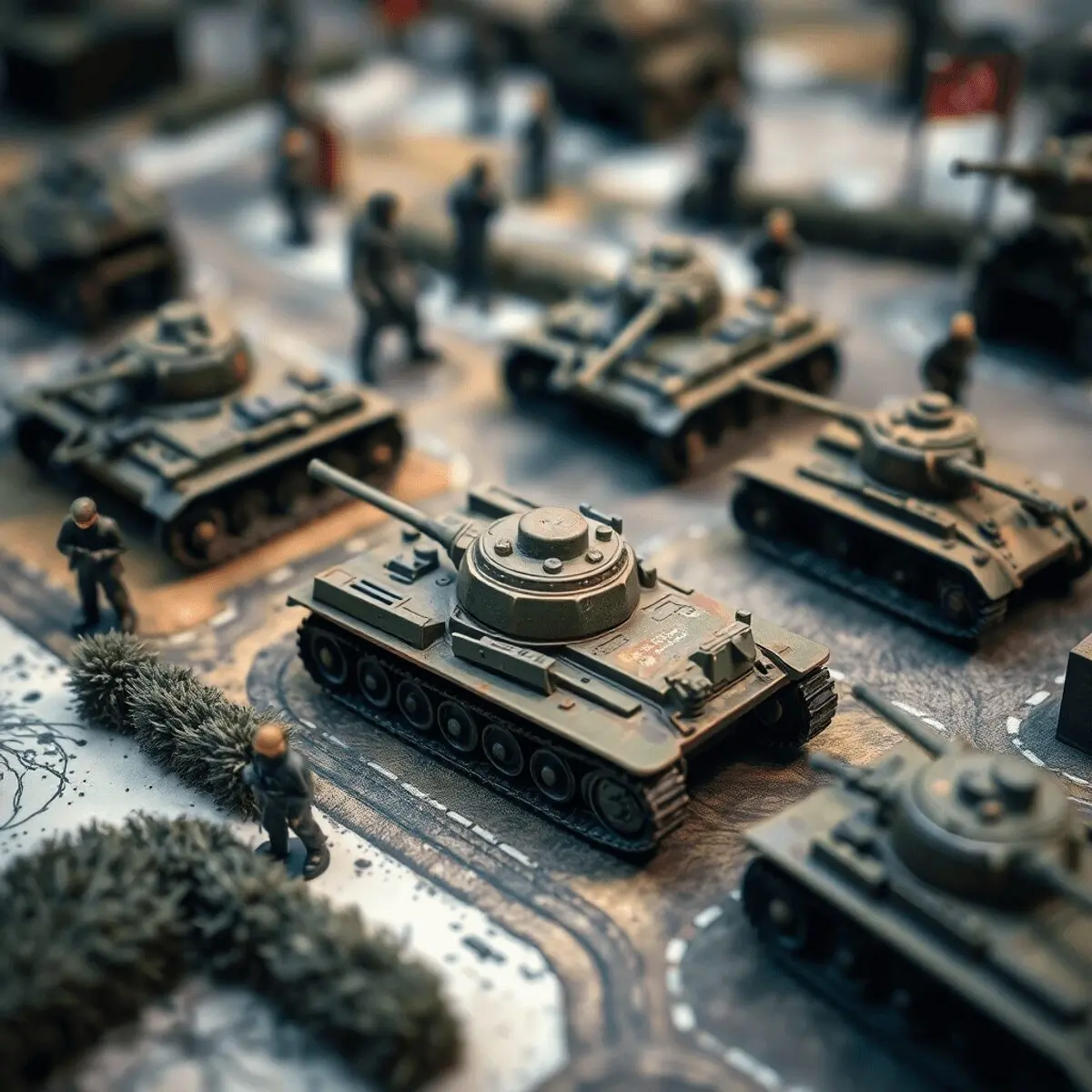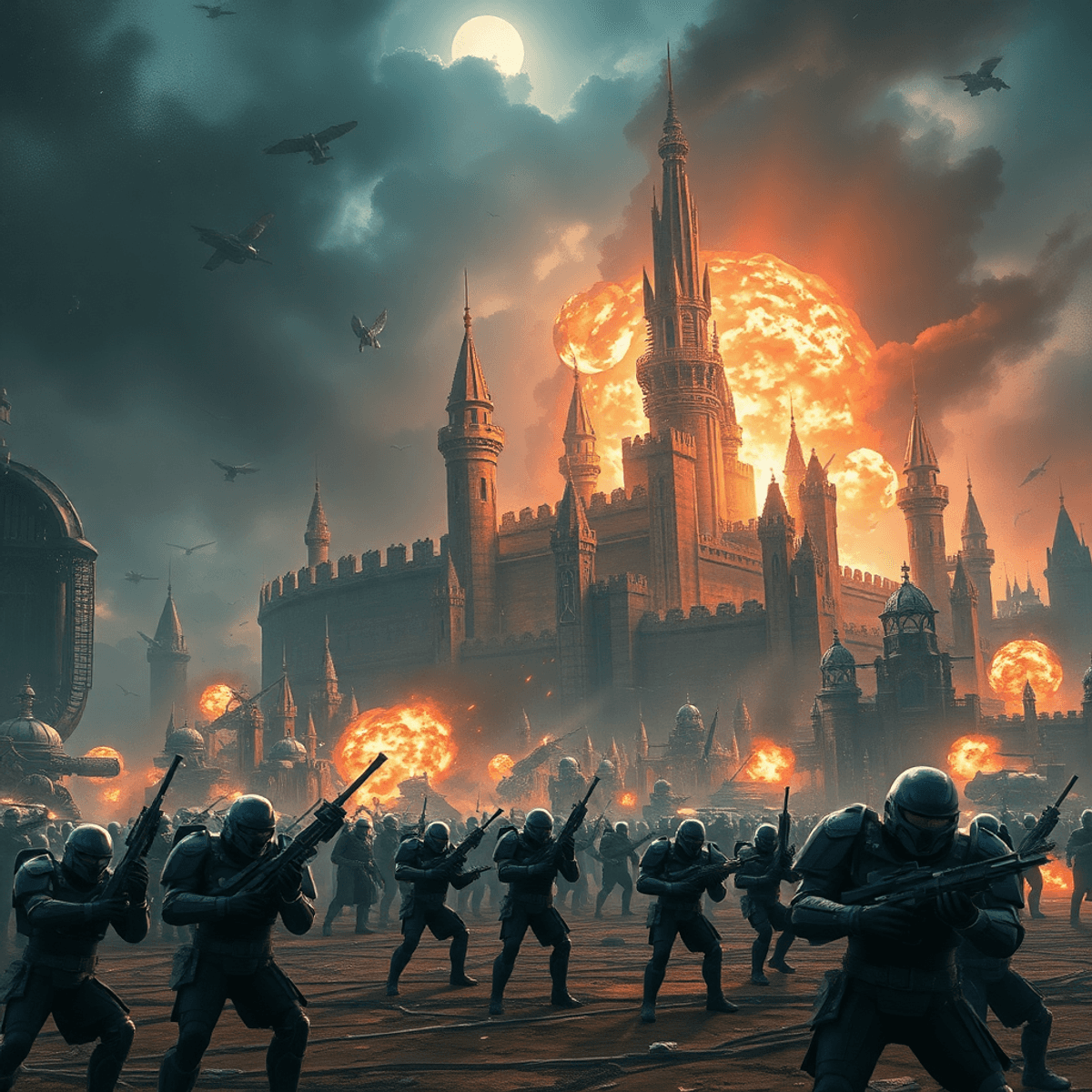
Warhammer 40,000, a game created by Games Workshop in 1987, is set in a dark future where humanity fights for survival in a universe filled with endless war. But beneath the gothic armor and alien threats lies a deeper layer—Warhammer 40K history is rooted in real-world military traditions, drawing heavily from Earth’s past conflicts and empires to shape its brutal, immersive setting.
Warhammer 40K takes inspiration from various sources such as real-world conflicts, ancient civilizations, and military traditions. This blending of historical elements with science fiction creates a unique setting where space marines battle alien forces and ancient threats endanger humanity.
The attention to historical detail can be seen throughout the Warhammer 40K universe:
- Battle tactics are based on real military strategies
- Faction cultures are reminiscent of Earth’s diverse civilizations
- Weapons and armor designs draw from historical influences
- Military hierarchies reflect actual armed forces
By combining historical accuracy with fantastical warfare, Warhammer 40K history offers an immersive experience that resonates with players around the globe. The game’s enduring popularity stems from its ability to reinterpret humanity’s martial past through the lens of a dystopian future, transforming historical echoes into epic sci-fi storytelling.
1. Historical Battles That Shaped the Warhammer 40K Universe
The rich tapestry of Warhammer 40K’s military conflicts draws direct inspiration from humanity’s most pivotal battles. The game’s creators meticulously studied historical warfare to craft authentic, engaging narratives that resonate with real-world military tactics and strategies.
1.1 The Siege of Terra
The Siege of Terra mirrors several historical sieges, particularly the Fall of Constantinople in 1453. Both events feature:
- Massive defensive fortifications
- Religious zealotry driving the attackers
- Betrayal from within
- Last-stand heroics by the defenders
- Revolutionary siege weapons
1.2 The Horus Heresy
The Horus Heresy bears striking similarities to the Roman Civil Wars, especially the Year of the Four Emperors (69 CE). These parallels include:
- Brother fighting brother
- Military leaders turning against their supreme commander
- Widespread political corruption
- The fracturing of a mighty empire
- Legendary battles that reshaped civilization
1.3 The Gothic War
The Gothic War campaign draws inspiration from World War II’s naval warfare in the Pacific Theater:
- Vast fleet engagements
- Strategic resource denial
- Island-hopping tactics
- Guerrilla warfare behind enemy lines
- Complex supply chain logistics
1.4 The Damocles Gulf Crusade
The Damocles Gulf Crusade reflects elements from various historical conflicts in Asia, particularly:
- The Vietnam War’s guerrilla tactics
- The cultural clash of Western and Eastern military philosophies
- Advanced technology versus superior numbers
- Challenging terrain and weather conditions
- Asymmetric warfare strategies
These historical influences shape Warhammer 40K’s combat mechanics and storytelling. The game incorporates authentic military doctrines, from ancient Roman legion tactics to modern special operations. Players experience reimagined versions of history’s most significant battles, enhanced by science fiction elements and the grim darkness of the far future.
The strategic depth of these historical inspirations adds layers of realism to the game’s battles. Military commanders’ actual tactics and decision-making processes influence how different factions operate on the tabletop, creating an immersive experience grounded in real-world military history.

2. Cultural and Historical Influences on Space Marine Legions
Space Marine Legions are the backbone of the Imperium’s military power. Each Legion has its own unique cultural identity influenced by humanity’s diverse history. These superhuman warriors embody the traits, traditions, and combat techniques of various ancient civilizations and military groups.
The Ancient Warrior Cultures
- Dark Angels (I Legion) – Drawing from medieval knightly traditions, they mirror the secretive Templar Knights with their inner circle hierarchy and quest-driven mentality. Their elite Ravenwing unit reflects the lightning-fast tactics of Polish Hussar cavalry.
- Emperor’s Children (III Legion) – Embracing Byzantine splendor and Renaissance artistry, these perfection-seeking warriors demonstrate the same obsession with excellence found in classical Italian societies.
- Iron Warriors (IV Legion) – These siege specialists reflect Greek military engineering prowess, adopting methodical approaches reminiscent of WWI trench warfare tactics.
Eastern Influences
- White Scars (V Legion) – Embodying the spirit of Mongolian horse archers, they practice hit-and-run warfare with the same deadly efficiency as Genghis Khan’s armies.
- Thousand Sons (XV Legion) – Ancient Egyptian mysticism permeates their ranks, from their use of scarab symbols to their pursuit of forbidden knowledge, mirroring the scholar-priests of Alexandria.
Warriors of Legend
- Vlka Fenryka (VI Legion) – Norse warrior culture lives through these Space Wolves, with their tribal structure and fierce combat doctrine echoing Viking berserkers.
- Blood Angels (IX Legion) – Combining Renaissance aesthetics with vampire mythology, they represent a unique fusion of artistic nobility and supernatural horror.
- World Eaters (XII Legion) – Their combat doctrine mirrors Roman gladiatorial traditions, emphasizing personal combat prowess and close-quarters fighting.
Modern Military Parallels
- Imperial Fists (VII Legion) – Their disciplined approach reflects Prussian military traditions, emphasizing fortification and unwavering dedication.
- Night Lords (VIII Legion) – Their organization mirrors modern criminal syndicates, complete with ritualistic tattoos
3. The Role of Fascist Imagery and Grimdark Aesthetic in Warhammer 40K
The Imperium of Man stands as a stark reflection of totalitarian regimes, deliberately incorporating fascist imagery to create a haunting dystopian future. The iconic double-headed eagle (Aquila) bears striking similarities to historical fascist symbols, while the Imperium’s rigid hierarchy, xenophobia, and cult of personality mirror real-world authoritarian states.
Games Workshop employs these elements not to glorify fascism, but to paint a brutal picture of humanity’s dark future. The Imperium represents:
- A bloated bureaucracy drowning in its own dogma
- Religious fanaticism taken to devastating extremes
- The sacrifice of individual rights for perceived survival
- State-sanctioned violence as a means of control
The term “grimdark” itself originated from Warhammer 40K’s famous tagline: “In the grim darkness of the far future, there is only war.” This aesthetic permeates every aspect of the setting through:
- Gothic architecture fused with industrial decay
- Brutal technology powered by human sacrifice
- Ancient superstition merged with space-age warfare
- Perpetual conflict on an incomprehensible scale
Games Workshop masterfully balances historical allegory with fictional storytelling by:
- Exaggeration: Taking real-world elements to absurd extremes
- Subversion: Using familiar imagery in unexpected contexts
- Satire: Creating dark humor through bureaucratic excess
- Moral Ambiguity: Avoiding clear heroes and villains
The grimdark aesthetic serves as both cautionary tale and creative framework. The Imperium’s resemblance to fascist regimes creates an intentionally uncomfortable parallel, forcing players to confront the horror of authoritarianism while engaging with the game’s rich narrative tapestry.
This artistic choice elevates Warhammer 40K beyond simple tabletop warfare into a complex exploration of power, corruption, and the cost of survival in an unforgiving universe. The historical influences provide a familiar foundation for players to understand the setting’s themes while the fictional elements push these concepts into new territories.

4. Crafting a Rich Tabletop Universe: The Legacy of Warhammer 40K Lore
Warhammer 40K’s enduring legacy stems from its masterful blend of historical elements, cultural archetypes, and dystopian themes. The game’s rich narrative tapestry has captivated players for over three decades, creating an immersive experience that transcends traditional tabletop gaming.
The depth of Warhammer 40K’s universe manifests through:
- Military Precision: Each faction’s combat doctrine draws from real military strategies, from the Space Marines’ shock-and-awe tactics to the Imperial Guard’s war of attrition
- Cultural Authenticity: Distinct cultural identities shape each army’s aesthetic, from architecture to battlefield traditions
- Religious Symbolism: Ancient faiths and beliefs weave through the narrative, adding layers of meaning to conflicts and alliances
The game’s historical allegories create powerful connections between players and their chosen armies. A Space Marine player commanding Ultramarines might study Roman military formations, while a Thousand Sons collector could delve into ancient Egyptian mysticism. This historical grounding helps players forge deeper connections with their armies and enriches their gaming experience.
The interweaving of real-world elements with science fiction creates a unique gaming atmosphere where:
“In the grim darkness of the far future, there is only war” – yet this war carries echoes of humanity’s past
The Cultural and Historical Depth of Strategy Board Games
Players don’t just move pieces across a board – they command armies whose traditions span millennia of both fictional and real-world history. This rich historical foundation transforms casual games into epic narratives, where each battle tells a story rooted in authentic military heritage and cultural tradition.
This intricate blend of strategy and narrative is reminiscent of the broader history of strategy board games, which have evolved over time to include various genres such as Eurogames. These games have significantly impacted modern gaming culture, as explored in our article on the history and evolution of Eurogames.
Moreover, the world of tabletop gaming is not limited to popular titles like Warhammer 40K or Eurogames. There exists a fascinating realm of obscure and forgotten board games, each with its own unique cultural significance. Additionally, the evolution of social and party board games reveals how these games have shaped societal trends over time.
Conclusion
The diverse and intricate universe behind Warhammer 40K history is a testament to how real-world inspiration fuels compelling worldbuilding. Drawing from sources like Roman legions, feudal knights, and 20th-century warfare, Games Workshop wove a narrative that is both futuristic and hauntingly familiar.
We encourage you to delve deeper into these historical connections:
- Study the cultural influences behind your favorite Space Marine Legion
- Research the historical battles that mirror the epic conflicts in the game
- Discover the real-world military tactics that shaped army strategies
This fusion of history and creativity offers a gaming experience that goes beyond mere tabletop battles. Every game becomes an opportunity to reinterpret historical warfare through a sci-fi perspective, adding depth to every strategic choice and narrative moment. In fact, this blending of history and gameplay isn’t exclusive to Warhammer 40K; it’s a defining feature of many classic board games. You can learn more about this captivating journey and its lasting impact on society in this article from Tabletop Trove.
So, the next time you command your armies on the battlefield, remember: you’re not just engaging in a game—you’re stepping into the legacy of Warhammer 40K history, where echoes of our own military past are reimagined in the grim darkness of the far future.