Tarot cards, often associated with mysticism and fortune-telling, have a deeper story rooted in gameplay. The tarot card game influence extends far beyond divination—it played a pivotal role in shaping early board games. With their symbolic imagery and structured suits, tarot cards introduced innovative mechanics that would lay the groundwork for storytelling and strategy in tabletop games for centuries to come.
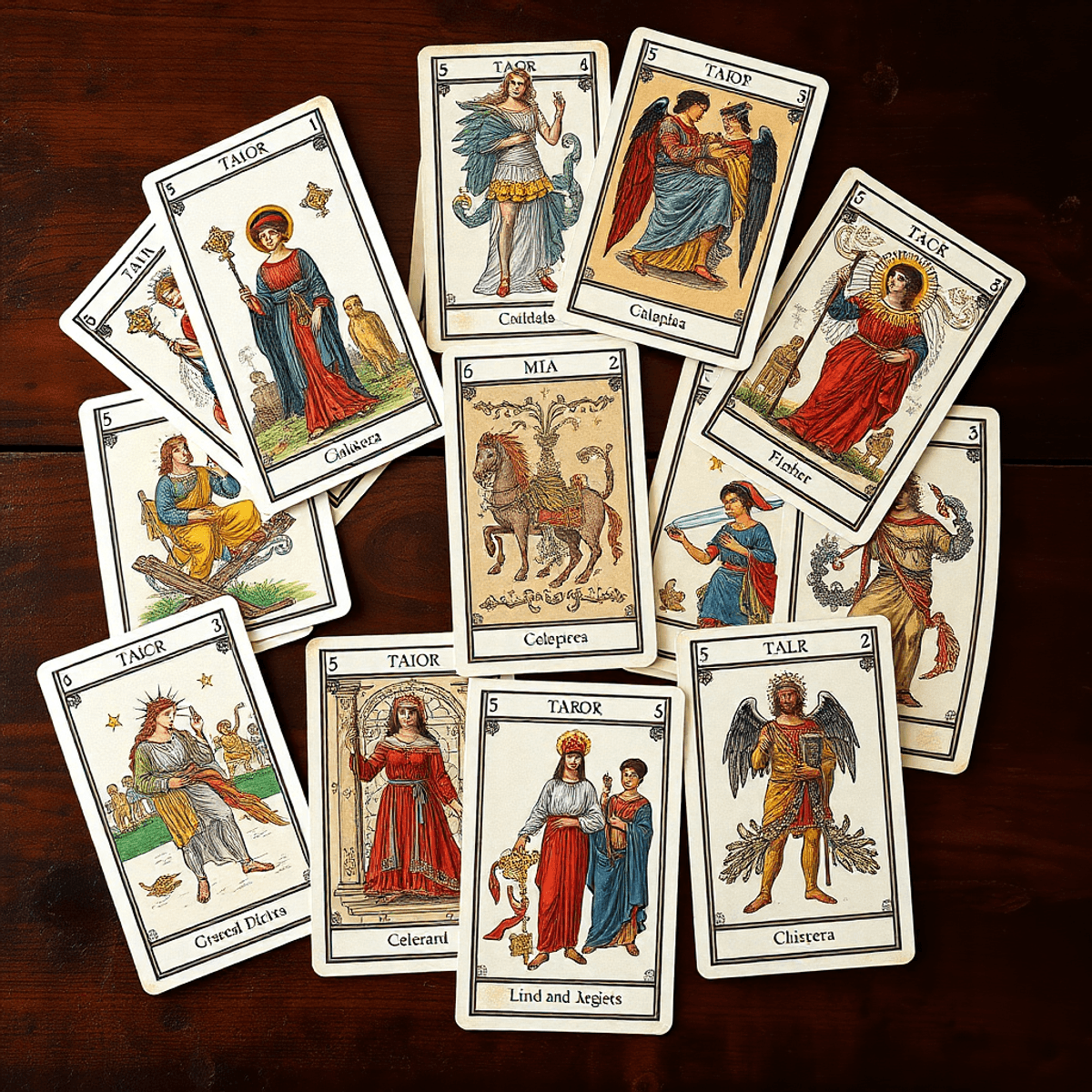
In 15th-century Italy, nobles would gather to play tarocchi, a trick-taking card game that eventually evolved into tarot. These beautifully designed cards, featuring intricate artwork and symbolic figures, provided sophisticated entertainment long before they were associated with the supernatural.
The true brilliance of tarot lies in its groundbreaking gameplay systems:
Strategic use of trump cards
Complex interactions between players
Rich storytelling through symbols
Multi-layered rules
These elements became the building blocks for numerous European card and board games that followed. The 78-card deck – consisting of 22 trump cards from the Major Arcana and 56 suit cards from the Minor Arcana – introduced revolutionary concepts in game design that are still relevant today.
So how did these elaborately decorated playing cards, once enjoyed by nobility and soldiers as a simple pastime, become a source of inspiration for game designers throughout history? The answer lies in the tarot card game influence—a blend of luck, strategy, and deep symbolism. These qualities made tarot a unique foundation for gameplay mechanics that would echo through centuries of tabletop design, from early European games to modern storytelling formats.
The Origins of Tarot Cards and Their Role in Early European Games
The history of tarot cards can be traced back to the early 15th century in Italy. During this time, a card game called tarocchi or trionfi became popular among the Italian nobility. These games were sophisticated trick-taking games that laid the foundation for what we now know as tarot cards. However, it’s important to note that the original purpose of these cards was not for fortune-telling or mystical practices.
The Structure of a Traditional Tarot Deck
A standard tarot deck consists of 78 cards, which are divided into two main sections:
Major Arcana: This section contains 22 trump cards that feature powerful symbolic figures.
Minor Arcana: This section includes 56 suit cards, which are further divided into four suits:
Wands (also known as batons)
Cups
Swords
Pentacles (also referred to as coins)
The Aristocratic Roots of Tarot: The Visconti-Sforza Deck
One of the earliest known tarot decks is the Visconti-Sforza deck, which serves as evidence of tarot’s connection to the aristocracy. In the 1450s, the Duke of Milan commissioned this deck, and it features intricately painted cards that showcase the family’s political ambitions and personal stories through carefully selected symbols. Each card was intentionally designed to convey the patron’s narrative within the context of the game.
The imagery found in the Visconti-Sforza deck drew inspiration from Petrarch’s poem “I trionfi,” which depicted allegorical triumphs such as Love, Time, and Death. These classical themes made their way into the Major Arcana trump cards:
The Emperor – representing earthly authority
The Sun – symbolizing divine illumination
Death – signifying transformation
The World – embodying completion and achievement
Renaissance Philosophical Influences on Tarot
During the Renaissance period, scholars and artists infused playing cards with deeper symbolic meanings that reflected the era’s interest in Neo-Platonism and Hermetic philosophy. This added layer of symbolism created a more immersive playing experience that went beyond simple gameplay mechanics.
Impact on Future Game Design Principles
Interestingly, the artistic and narrative elements present in these early tarot decks laid the groundwork for future game design principles. Game creators would later adopt similar approaches to create thematic storytelling through card imagery, character archetypes that drive gameplay, visual symbolism that enhances player engagement, and narrative progression through card sequences.
Other Types of Games Emerging in Europe
In addition to tarot’s influence on game design, this period also saw the rise of various other types of games across Europe. For example, Eurogames, known for their strategic depth and thematic richness, began to gain popularity around this time. Some Eurogames can also be seen as influenced by tarot in terms of their design elements.
These early tarot decks demonstrated how games could weave together complex symbolism, strategic play, and storytelling elements. The cards serve not just as a medium for gameplay but also as a canvas for artistic expression and narrative exploration.
How Tarot Mechanics Influenced Early European Card Games
The trick-taking mechanics of early tarot games created a rich foundation for strategic card play across Europe. Players would follow suit when possible, with the highest card winning each trick. The addition of trump cards – the Major Arcana – introduced a powerful new layer of strategy, allowing players to win tricks even without matching suits.
These core mechanics spread through European gaming circles, spawning distinct regional variations:
French Tarot Nouveau: Emphasized aggressive trump play and point-scoring combinations
German Cego: Added bidding elements and complex scoring systems
Swiss Troccas: Featured unique partnership dynamics and specialized trump hierarchies
The trump card innovation proved revolutionary for card game design. Players needed to:
Track played cards
Manage their trump resources
Read opponents’ patterns
Time their power plays strategically
This blend of memory, resource management, and psychological warfare created engaging player interactions that would influence centuries of card game development.
The Importance of Hidden Information
Hidden information became a crucial element – players couldn’t see opponents’ hands, forcing decisions based on probability and behavioral cues. This mechanic laid groundwork for future hidden role games, where understanding opponents’ concealed motives drives gameplay.
The Shift in Tarot’s Identity
By the early 18th century, tarot’s identity began shifting. French occultist Jean-Baptiste Alliette published the first known tarot divination guide, introducing mystical interpretations of the cards. This spiritual dimension added new layers of meaning to the existing game mechanics:
Trump cards gained symbolic significance beyond their gameplay value
Random draws created moments of dramatic revelation
Game designers recognized the powerful engagement created by this fusion of strategy and symbolism. The tension between player agency and fate-driven outcomes sparked new approaches to game design. Cards could serve both as tactical tools and storytelling devices, with hidden information driving both strategic and narrative suspense.
The Lasting Legacy of Tarot Mechanics
This mechanical legacy lives on in modern card games that blend strategy with symbolism, and in board games featuring hidden roles or destiny-driven elements. The core innovations of tarot gameplay – trump mechanics, hidden information, and the marriage of strategy with symbolism – continue shaping how designers approach player interaction and game narrative.
The Enduring Influence of Tarot on Modern Thematic Board Games with Hidden Roles and Fate Elements
Modern board game designers draw deep inspiration from tarot’s rich legacy of symbolism and mechanics. This influence is part of a larger trend, reflecting the timeless journey of classic board games, which have evolved over time yet continue to shape modern gaming.
Hidden Information and Deduction
Games like The Resistance embrace the hidden information aspect central to tarot gameplay, where players must deduce others’ secret roles through careful observation and deduction – much like interpreting the layered meanings within tarot cards.
Symbolism and Interpretation
Mysterium, published by Libellud, directly channels tarot’s mystical elements. One player acts as a ghost communicating through abstract vision cards, while others interpret these symbolic messages to solve a murder mystery. The game’s designer, Oleksandr Nevskiy, noted:
“We wanted to capture that magical moment of revelation when seemingly random images connect to form meaningful patterns – the same spark that happens during tarot readings.”
The Legacy of Dragonholt system incorporates fate-driven narratives through its unique story-based gameplay. Players draw cards that shape their character’s destiny, mirroring how tarot spreads weave individual cards into coherent narratives. This mechanic creates branching storylines influenced by both chance and player choice.
Key Tarot-Inspired Mechanics in Modern Games:
Hidden Information Systems
Secret role assignments
Deduction-based gameplay
Information asymmetry between players
Symbolic Interpretation
Abstract card art requiring player interpretation
Multiple meaning layers within game components
Narrative-building through symbol combinations
Fate-Driven Elements
Random card draws affecting story direction
Balance between chance and strategy
Character development through card reveals
Portal Games’ Runes & Regulations demonstrates how designers integrate tarot’s symbolic depth into strategic gameplay. Players manipulate mystical symbols to influence game outcomes while maintaining mechanical balance. The game’s lead designer explained that tarot’s dual nature as both game and divination tool inspired this blend of strategic depth and thematic resonance.
These modern interpretations preserve tarot’s essential qualities: hidden knowledge, symbolic interpretation, and the dance between fate and player agency.
Conclusion
The transformation of tarot from a noble pastime to a mystical tool marks a fascinating chapter in game history. The tarot card game influence is seen in the use of hidden roles, symbolic layers, and storytelling frameworks—concepts that now enrich modern tabletop design. Its legacy is felt every time players interpret meaning from cards beyond face value.
Today’s games like Mysterium and The Resistance carry forward tarot’s legacy of blending strategy with narrative elements. These designs prove that the centuries-old connection between cards, fate, and player interaction remains deeply engaging for modern audiences.
Ready to explore this rich gaming heritage? Consider these starting points:
Examine the symbolic artwork in your favorite card-based games
Try a traditional tarot trick-taking game with a historical deck
Discover modern board games that incorporate elements of mysticism and hidden roles
The enduring tarot card game influence continues to inspire imaginative play. By drawing from this historical tradition, today’s game designers infuse their creations with narrative depth, symbolic mechanics, and shared storytelling—just as Renaissance players once did with their original tarot decks.