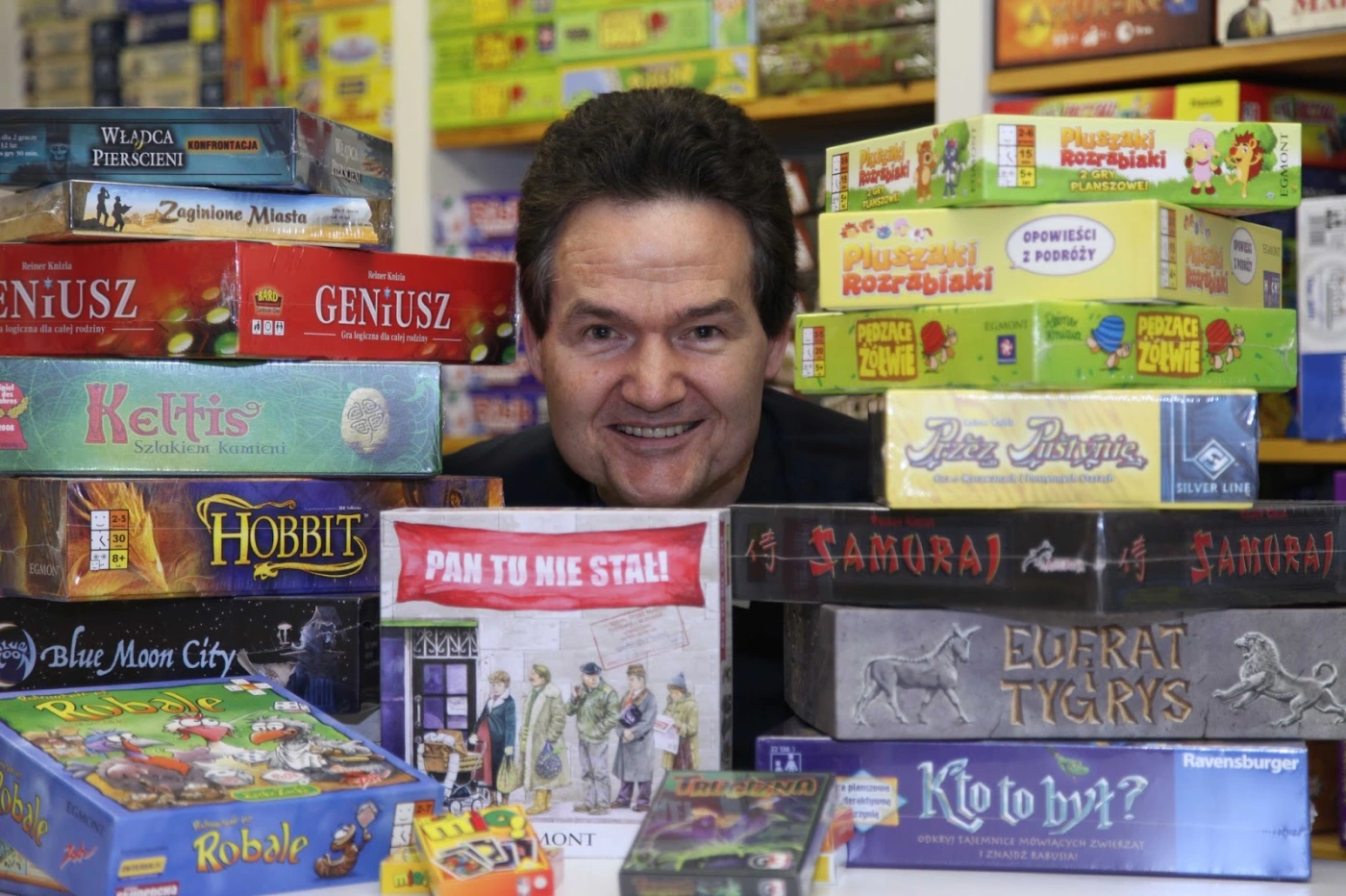
Meet Uwe Rosenberg, a talented game designer who went from making fun bean-trading card games to creating complex agricultural simulations that revolutionized board gaming. His story reflects the growth and development of Eurogames as a whole.
Rosenberg’s journey is truly impressive. He started with the charming Bohnanza, a quirky card game about trading beans, and then moved on to the brilliant Agricola, a deep strategic farming simulation. This evolution in his work showcases one of the most intriguing transformations in the gaming industry.
But what motivates a designer to transition from light-hearted party games to intricate economic simulations? The answer lies in Rosenberg’s exceptional skill at understanding, improving, and reinventing game mechanics while always prioritizing resource management and player interaction.
This shift in focus not only shaped Rosenberg’s career but also played a significant role in defining an entire genre of games. His groundbreaking approach to game design has inspired countless creators and set new benchmarks for strategic complexity in contemporary Eurogames. From simple card trading mechanics to elaborate worker placement systems, Rosenberg’s evolution demonstrates how a designer’s artistic vision can progress while remaining faithful to their fundamental beliefs.
Can the same creative genius behind cheerful bean farmers also produce one of the most highly regarded strategic games ever? Join us as we delve into the extraordinary journey that links these two significant milestones in gaming history.

The Evolution of Uwe Rosenberg’s Game Design Philosophy
Uwe Rosenberg’s journey into game design began during his university years while studying statistics. His early designs reflected a mathematical mindset, focusing on elegant mechanics rather than thematic depth. The creation of Bohnanza in 1997 marked his first significant breakthrough in the industry.
The Bohnanza Revolution
Bohnanza introduced a unique twist on traditional card games through its innovative hand management system. Players cannot rearrange their cards, creating tension and strategic depth through a simple rule. The game’s core mechanics include:
- Mandatory trading – Forces player interaction and negotiation
- Bean field management – Introduces resource optimization
- Fixed card order – Creates challenging decisions from limitations
The game’s quirky theme of bean farming, complete with pun-filled card names and humorous artwork, made complex economic concepts accessible to casual players. This combination of depth and accessibility helped Bohnanza sell over 3 million copies worldwide.
From Casual to Complex
The success of Bohnanza provided Rosenberg financial stability and creative freedom to explore more complex design spaces. His subsequent games showed a gradual increase in mechanical complexity:
- 2000-2005: Focus on card game variations and expansions
- 2005-2007: Experimentation with resource management mechanics
- 2007-present: Development of intricate worker placement systems
The early 2000s saw significant changes in the Eurogame market. Players sought deeper strategic experiences, and Rosenberg responded by incorporating:
- Economic simulation elements
- Long-term strategic planning
- Interconnected resource systems
- Multiple paths to victory
This evolution aligned with broader trends in Eurogame development, as designers pushed boundaries beyond traditional family-weight games. Rosenberg’s design philosophy shifted toward creating games that simulated real-world economic systems while maintaining engaging gameplay loops.
Design Philosophy Transformation
Rosenberg’s approach to game design transformed from mechanism-first to theme-integrated development. His later games demonstrate careful attention to historical accuracy and logical consistency within their economic systems. This transformation manifested through:
- Deeper Research – Historical and economic background investigation
- Mechanical Integration – Systems that reflect real-world scenarios.
While Rosenberg’s designs are often celebrated for their complexity and depth, it’s important to acknowledge the potential challenges they may present to certain players. For instance, individuals with specific learning disabilities might find the intricate rules or the strategic depth of some of his games overwhelming. Understanding these nuances is crucial for making gaming more inclusive. Incorporating elements from special education resources, such as those found in this continuum of special education services for school-age students with disabilities, could greatly enhance the accessibility of his games.
Agricola: A Landmark in Strategic Eurogames
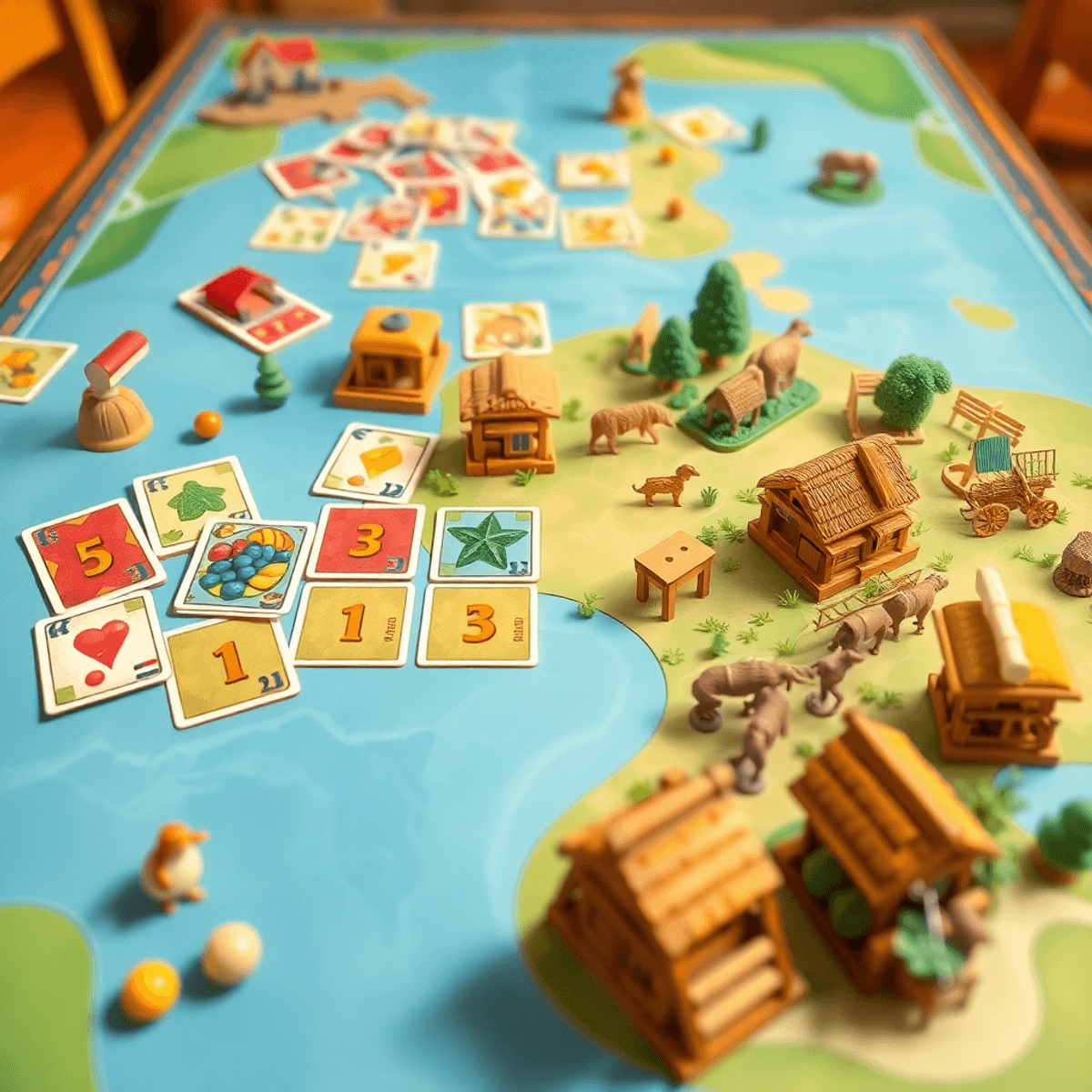
Released in 2007, Agricola marked a defining moment in board game history, introducing a rich tapestry of strategic depth through its innovative worker placement mechanics. Players step into the role of 17th-century farmers, each tasked with developing their farmstead through careful resource management and strategic worker deployment.
The game’s core mechanics revolve around three key elements:
- Worker Placement: Each round, players assign family members to various action spaces, collecting resources or performing tasks
- Resource Management: Players juggle wood, clay, stone, food, and other materials to expand their farm
- Farm Development: Strategic decisions between building structures, cultivating crops, or raising livestock shape each player’s unique agricultural empire
Agricola’s brilliance lies in its intricate balance of scarcity and opportunity. Each action space accommodates only one worker, creating natural player interaction and competition for resources. The game’s tension builds as players face the constant pressure of feeding their families while pursuing long-term development strategies.
The design showcases Rosenberg’s mastered ability to weave meaningful decisions into every turn. Players must:
- Plan several rounds ahead
- Adapt to opponents’ moves
- Balance immediate needs with future goals
- Navigate the risk-reward spectrum of different strategies
The game’s depth extends through its card system, featuring:
- Minor Improvements
- Occupations
- Draft variants
- Family game mode
These elements create high replayability while allowing players to adjust complexity to their preference.
Agricola earned numerous accolades, including:
- #1 position on BoardGameGeek’s rankings (2008-2010)
- International Gamers Award (2008)
- Deutscher Spiele Preis (2008)
- Essen Feather (2007)
The game’s success sparked a renaissance in worker placement designs, inspiring countless titles in the following years. Its influence extends beyond mechanics – Agricola demonstrated how a seemingly mundane theme could deliver profound strategic depth when paired with elegant design principles.
The farming theme, far from being a mere backdrop, integrates seamlessly with the mechanics. Each action mirrors real-world agricultural decisions.
Expanding the Farming Theme Beyond Agricola
After establishing his mastery of worker placement mechanics with Agricola, Uwe Rosenberg pushed the boundaries of farming-themed games even further. His subsequent designs introduced richer gameplay elements while maintaining the core appeal of agricultural development.

Caverna: The Cave Farmers
Caverna: The Cave Farmers reimagined the farming experience by adding fantasy elements and mining mechanics. The game removed Agricola’s punishing food requirements, allowing players to explore diverse strategies without constant survival pressure. Key innovations include:
- Customizable room tiles for unique dwelling configurations
- Expedition mechanics featuring armed dwarves
- Pre-revealed action spaces eliminating the need for cards
- Multiple paths to victory through farming or mining
A Feast for Odin
A Feast for Odin represents Rosenberg’s most ambitious design, expanding the resource management system to unprecedented levels. The game features a staggering 48 action spaces and introduces spatial puzzle elements through polyomino tile placement. Players manage Viking settlements through:
- Complex conversion chains transforming basic resources into valuable goods
- Strategic occupation of new territories through exploration
- Integration of hunting, raiding, and crafting mechanics
- Flexible worker allocation across multiple rounds
Both games showcase Rosenberg’s commitment to mechanical depth while reducing player frustration. The removal of strict penalties creates room for experimentation and personal expression within the game systems. Resource types expanded from Agricola’s basic five to over 20 in A Feast for Odin, creating intricate economic webs for players to navigate.
These designs reflect Rosenberg’s philosophy of iterative improvement. Each game builds upon proven concepts while introducing novel elements that enhance player engagement. The increased complexity comes paired with more forgiving mechanics, striking a balance between strategic depth and accessibility.
Bridging Casual and Heavy Games with Lighter Yet Elegant Designs
Uwe Rosenberg’s design brilliance shines through his ability to create lighter games that pack strategic depth into streamlined rulesets. Two standout examples showcase this mastery: Patchwork and Cottage Garden.
Patchwork: A Two-Player Quilt-Building Game
Patchwork distills complex economic decisions into an intimate two-player experience. Players compete to build the most aesthetically pleasing and efficient quilt using a clever time-track mechanism. Each patch piece costs both buttons (the game’s currency) and time. This creates a fascinating puzzle where players must balance:
- Immediate vs. long-term button income
- Space efficiency on their personal quilt board
- Time management on the central track
- Denial of valuable pieces to their opponent
Cottage Garden: A Floral Tile-Laying Game for Up to Four Players
Cottage Garden expands these spatial puzzle elements into a broader experience for 1-4 players. Gardeners select flora tiles from a central market to create beautiful flower beds. The game introduces a seasonal scoring system that rewards careful planning while maintaining accessibility.
These designs demonstrate Rosenberg’s talent for creating gateway games that appeal to casual players while offering strategic depth for experienced gamers. Key elements include:
- Clear, intuitive rules that can be taught in minutes
- Meaningful decisions from the first turn
- Multiple paths to victory
- Visual appeal through artwork and components
- Short playtime (30-45 minutes)
The success of these lighter designs proves Rosenberg’s versatility as a designer. Rather than simplifying existing mechanics, he creates new systems that feel fresh yet familiar. The spatial puzzle elements connect thematically to his farming games while offering distinct experiences that stand on their own merit.
These games serve as perfect entry points into the broader world of modern board gaming, introducing core concepts like resource management and efficiency optimization in digestible portions. Their elegant design allows new players to grasp strategic concepts that appear in more complex games while enjoying engaging gameplay sessions.
Uwe Rosenberg’s Enduring Impact on Eurogame Development
Rosenberg’s influence on modern board game design extends far beyond his individual titles. His innovative approach to worker placement mechanics revolutionized economic-themed games, creating a blueprint that countless designers follow today. The intricate resource management systems in games like Agricola and Le Havre established new standards for strategic depth in Eurogames.
The Distinctive Characteristics of the “Rosenberg Style”
The “Rosenberg style” of worker placement features distinctive characteristics:
- Multiple paths to victory
- Tight resource economies
- Balanced tension between short-term gains and long-term strategy
- Strong thematic integration with mechanics
These elements have become foundational principles for a new generation of game designers. Matt Dunstan, designer of Elysium, credits Rosenberg’s work as a major influence: “His games taught me how to weave complex systems into approachable gameplay experiences.”
Contemporary Releases Influenced by Rosenberg
The impact of Rosenberg’s design philosophy resonates through contemporary releases. Games like Viticulture, Everdell, and Architects of the West Kingdom build upon his pioneering work in worker placement while adding their own innovations. These titles demonstrate how Rosenberg’s core principles can adapt to diverse themes and settings.
Raising Industry Standards Through Thematic Authenticity
Beyond mechanics, Rosenberg’s commitment to thematic authenticity has raised industry standards. His meticulous research into historical farming practices, economic systems, and daily life brings authenticity to his games. This attention to detail inspires designers to create experiences where theme and mechanics work in harmony rather than opposition.
Shaping Player Expectations with the “Rosenberg Effect”
The “Rosenberg effect” continues to shape player expectations. Modern gamers seek experiences that combine strategic depth with thematic richness – a balance that Rosenberg mastered through decades of design work. His games prove that complex systems can coexist with engaging themes, creating experiences that challenge players while maintaining narrative coherence.
For more insights into the lasting impact of famous board game creators like Uwe, explore this resource which delves into their innovative creations and influence on the gaming industry.
Conclusion
Uwe Rosenberg’s journey from Bohnanza to Agricola represents a masterclass in creative evolution. His portfolio spans the full spectrum of gaming experiences – from light-hearted bean trading to intricate farming simulations. This range offers something for every type of player, making his work a perfect entry point into the world of modern board gaming.
Start with Bohnanza to experience the pure joy of trading and negotiation. Move on to Patchwork or Cottage Garden to discover elegant two-player experiences. When ready for deeper strategic waters, dive into Agricola or A Feast for Odin to understand why Rosenberg’s games have shaped an entire genre.
His path raises fascinating questions about artistic growth:
- How do creators balance accessibility with complexity?
- What drives a designer to explore new territories while maintaining their signature style?
- Can simplicity and depth coexist in game design?
Rosenberg’s evolution challenges us to consider how creative minds grow and adapt. His journey from simple card games to complex strategic experiences shows that creative boundaries exist only to be pushed, reshaped, and redefined – one game at a time.