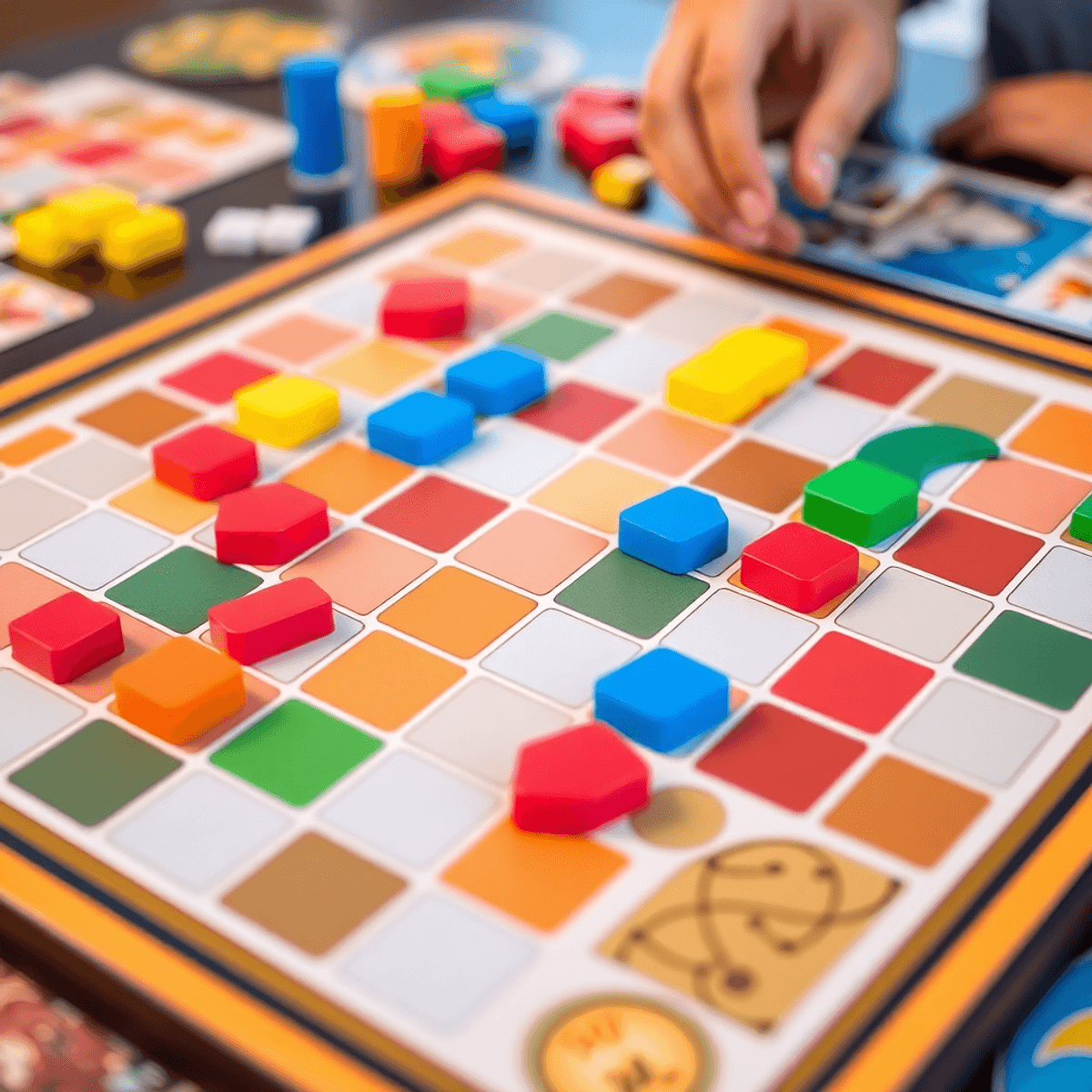
Polyomino-based games have become increasingly popular in the world of board gaming, showcasing an exciting evolution in the industry. Games like Patchwork, Barenpark, Isle of Cats, and My City have captivated players globally with their unique gameplay mechanics.
At their core, polyomino games test players’ abilities in spatial reasoning, which involves visualizing and manipulating shapes in space. To succeed, players must also master grid efficiency by fitting irregularly shaped tiles into limited board spaces, creating a satisfying puzzle-solving experience that combines strategy with visual thinking.
Since its release in 2014, Patchwork has transformed tile placement games by introducing innovative mechanics that blend resource management with spatial optimization. Players must carefully navigate between acquiring the ideal puzzle pieces and managing their button economy, establishing a design framework that many games have since followed.
This innovative approach is part of a larger trend in crafting the board, where tile placement and modular game design have significantly evolved over time.
Key elements that define these games include:
- Spatial Reasoning: The core skill of visualizing how pieces fit together
- Grid Efficiency: Maximizing board coverage while minimizing wasted space
- Resource Management: Balancing acquisition of new pieces with available resources
- Strategic Planning: Looking ahead to optimize future moves and scoring opportunities
However, the evolution of board games goes beyond just polyominoes. Other mechanics such as dice, worker placement, and deck-building have also played significant roles in shaping gameplay experiences.
This article will explore the fascinating world of polyomino games, delving into their mechanics, themes, and how contemporary titles continue to push boundaries within this genre. Whether you’re a fan of puzzles or an experienced strategy gamer, these games offer a distinctive combination of tactical complexity and spatial challenges.

Understanding Spatial Reasoning in Polyomino Games
Spatial reasoning skills are essential in polyomino board games, as they require players to visualize, manipulate, and arrange pieces within specific spaces. These games provide a mental workout through various skills:
- Pattern Recognition – Players must identify the best placement opportunities by analyzing the shapes of available pieces and the current board layout.
- Mental Rotation – Being able to mentally rotate pieces to find the perfect fit is crucial for success.
- Visual-Spatial Working Memory – Keeping track of possible future placements while planning current moves.
How Games Like Patchwork Challenge Spatial Reasoning Skills
Games such as Patchwork take these skills to another level by introducing time pressure and resource management alongside spatial challenges. Players are faced with important decisions regarding:
- When to choose a piece
- How to orient complex shapes optimally
- How to manage empty spaces
- Planning positions in the long run
The Importance of Grid Efficiency in Polyomino Games
In these games, grid efficiency becomes a crucial strategic factor. Achieving success often depends on:
- Space Maximization – Fitting pieces together with minimal gaps
- Resource Optimization – Balancing the cost of pieces against their coverage potential
- Strategic Positioning – Creating opportunities for future high-value placements
The Unique Player Interaction in Polyomino Games
The spatial puzzle element creates a distinct form of player interaction, where each decision affects future possibilities. Players must continuously assess trade-offs between immediate space coverage and maintaining flexibility for later moves. This results in a dynamic playing experience where spatial awareness directly translates into strategic advantage.
These mechanics reward players who develop strong visualization skills and strategic foresight, making each game session both a puzzle-solving exercise and a test of tactical planning.
The Legacy of Patchwork: A Deep Dive into Tile Placement Mechanics
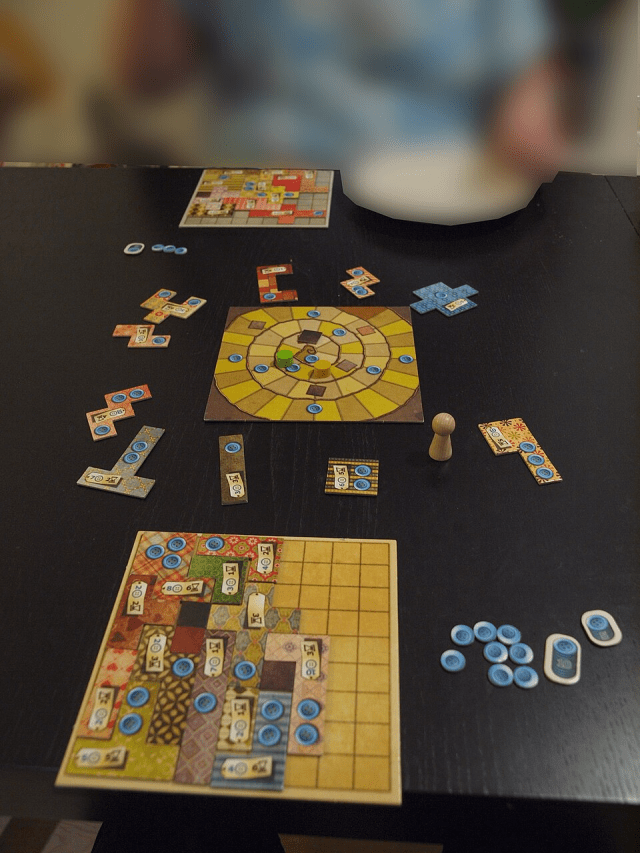
Patchwork changed the game for tile placement puzzle games with its clever design and seemingly simple rules. In this game, players compete to make the most stunning quilt by choosing and arranging polyomino patches on their own boards. What sets Patchwork apart is its unique time track system, which introduces an interesting decision-making aspect – each patch takes up a certain number of spaces on the time track, forcing players to find a balance between wanting valuable pieces and keeping up with the pace of the game.
The Dual-Currency System: Patchwork’s Defining Feature
One of the key features that makes Patchwork so engaging is its dual-currency system. Players have to manage two resources: time and buttons. Each patch has a specific button cost associated with it, which means players need to carefully plan their moves and make strategic decisions about when to spend their buttons.
This dual-currency system creates several layers of strategy in the game:
- Income Generation: Some patches have button symbols on them, which means they will provide players with recurring income during specific points on the time track. This adds an element of long-term planning as players try to anticipate when they will need extra buttons.
- Space Management: Larger patches may require more buttons to acquire, but they also cover more space on the board. Players must weigh the benefits of getting these larger pieces against their current button supply and overall board layout.
- Opportunity Cost: Sometimes it might be tempting to skip over expensive patches early in the game because they require a significant investment of buttons. However, this decision could come back to haunt players later on if they find themselves unable to use certain buttons or missing out on valuable opportunities.
The Button Economy: Adding Depth through Cyclical Gameplay
The concept of a button economy is another aspect that adds depth to Patchwork’s gameplay. Players go through a cycle where they need to spend buttons in order to acquire new patches, but those patches also need to be placed strategically in order to earn more buttons.
Here’s how this cyclical nature works:
- Spend buttons to acquire patches
- Place patches strategically on your board
- Earn additional buttons based on how well you placed those patches
- Use the earned buttons to purchase even better or more valuable patches
This cycle creates a constant push and pull between acquiring new pieces and optimizing existing ones. Players must always be thinking ahead about how their current actions will impact future turns and overall scoring potential.
The Perfect Puzzle Space: Balancing Creativity with Meaningful Decisions
Patchwork’s choice of using a 7×7 grid as its puzzle space is no accident – it strikes an ideal balance between allowing for creative placement strategies while still making each decision feel significant.
With such limited space available, every single move becomes crucial. Players cannot afford to waste any opportunities or leave gaps on their boards that cannot be filled later on.
Additionally, having a fixed grid size encourages players to think outside the box when it comes to placing their patches. They cannot rely solely on traditional methods or expected patterns; instead, they must constantly adapt their strategies based on what pieces are available at any given time.
The Time Track Mechanic: Creating Tension through Trade-offs
At first glance, it may seem like managing time would simply mean trying not fall behind or lose turns throughout gameplay – but Patchwork takes this concept further by introducing trade-offs between different types of actions.
This is
Notable Titles Evolving from Patchwork’s Design Influence
Barenpark: Building Bear Parks with Efficient Tile Placement
Barenpark takes the spatial puzzle elements of Patchwork and transforms them into a competitive park-building experience. Players become zoo directors tasked with creating the most impressive bear sanctuary through strategic tile placement and resource management.
The game introduces a unique supply board system where players select polyomino tiles representing various bear enclosures, restrooms, and food stands. Each tile category brings distinct scoring opportunities:
- Green Spaces: Basic park areas that serve as foundations
- Animal Houses: Specialized enclosures for different bear species
- Amenities: Essential facilities like restaurants and toilets
- Unique Attractions: High-scoring special features
Players build their parks on individual boards divided into a grid of squares. The placement rules add strategic depth:
- Tiles must connect to existing structures
- Certain spaces grant immediate bonuses when covered
- Achievement tiles reward specific placement patterns
The scoring system in Barenpark creates engaging decision points throughout the game. Players earn points by:
- Completing sections of their park board
- Creating specific arrangements of buildings
- Collecting sets of bear species
- Racing to place high-value attractions first
The game builds upon Patchwork’s design principles through its supply board mechanic. This innovation creates a dynamic market where players must balance immediate needs against long-term strategy. The first player to claim specific tile types often gains advantages, adding a race element absent in Patchwork.
Barenpark’s achievement system introduces milestone-based competition. Players vie to be the first to accomplish specific goals:
- Building a certain number of bear houses
- Creating specific facility combinations
- Completing designated areas of their park
The game maintains tension through its end-game trigger system. When a player fills their fourth park board, the final round begins. This creates pressure to maximize point-scoring opportunities while managing limited remaining actions.
The spatial puzzle at Barenpark’s core rewards efficient park design. Players must consider:
- Optimal tile configurations
- Strategic use of bonus spaces
- Access paths between attractions
- Future expansion possibilities
2. Isle of Cats: Tetris-like Cat Rescue Gameplay with Varying Complexity Levels
Isle of Cats transforms polyomino placement into a heartwarming mission of rescuing feline friends from an island before an evil Lord Vesh arrives. Players draft cards and collect resources to rescue cats represented by colorful polyomino pieces, each with unique shapes and characteristics.
The game’s core mechanics blend card drafting with spatial puzzle-solving:
- Family Mode strips down complexity to focus on pure polyomino placement
- Standard Mode adds strategic depth through:
- Card drafting system
- Resource management
- Multiple scoring objectives
- Special basket cards for enhanced cat-rescuing abilities
Players must consider both immediate placement opportunities and long-term scoring potential when deciding which cats to rescue. The game rewards strategic thinking through:
- Color-matching bonuses
- Family grouping benefits
- Rare cat collection points
- Room completion objectives
The Late Arrivals expansion enriches gameplay with:
- New cat families
- Additional room layouts
- Enhanced scoring opportunities
- Solo mode variations
Isle of Cats stands out by offering adaptable complexity levels while maintaining the satisfying puzzle core that made Patchwork influential. The game’s whimsical theme masks deep strategic decisions about efficient space utilization and optimal scoring combinations.
3. My City: A Family Campaign Game with Impactful Actions and Extended Playtime
My City brings legacy-style mechanics to the polyomino genre through an engaging 24-episode campaign. Each player develops their own city across multiple games, with permanent changes affecting future gameplay sessions. This innovative approach is part of a broader trend in [legacy campaign-based board games](https://tabletoptrove.com/games-that-evolve-the-history-and-future-of-legacy-campaign-based-board-games), which have redefined gameplay by adding a layer of evolution to the gaming experience.
The game’s brilliance lies in its persistent consequences:
- Sticker placement alters board layouts
- Special rules unlock new scoring opportunities
- Building locations impact future development options
- Personal city boards evolve based on player decisions
Players place polyomino building tiles on their individual boards, racing to construct the most efficient city while adapting to changing objectives. The game masterfully balances accessibility with strategic depth – new players can grasp basic concepts quickly, yet experienced gamers find satisfaction in optimizing their city’s growth.
The innovative double-sided board design extends My City’s replayability beyond the campaign. One side tracks campaign progress, while the eternal game side offers a standalone experience with standardized rules. This dual-nature approach creates two distinct ways to enjoy the spatial puzzle mechanics:
- Campaign Mode: Progressive complexity with permanent changes
- Eternal Game: Reset-friendly competitive experience
The scoring system rewards both immediate tactical decisions and long-term strategic planning, pushing players to consider how current tile placements might affect future opportunities within their growing cityscape.
Expanding Beyond Patchwork: New Directions for Polyomino Games
The polyomino genre continues to evolve with innovative designs that push beyond Patchwork’s original framework. These new titles blend familiar spatial mechanics with fresh themes and gameplay elements.
New York Zoo & Planet Unknown: Unique Themes and Mechanics
New York Zoo transforms the polyomino experience into a vibrant zoo management simulation. Players build animal enclosures using polyomino tiles while breeding and expanding their animal populations. The game introduces a unique movement mechanic where players must choose between:
- Constructing new enclosures
- Acquiring animals for existing exhibits
- Triggering breeding events
This creates a dynamic puzzle where timing becomes as crucial as spatial planning. The breeding mechanic adds a layer of resource management that complements the spatial challenges, rewarding players who can balance both aspects effectively.
Planet Unknown takes polyomino placement into the cosmos. Players become interplanetary explorers, using uniquely shaped tiles to terraform alien worlds. The game features:
- Individual player boards representing different planets
- A shared central resource wheel that rotates between turns
- Specialized polyomino tiles that represent different planetary features:
- Water systems
- Energy grids
- Biodomes
- Mining operations
The rotating resource wheel creates interesting decisions about timing and opportunity costs. Players must consider not just where to place their tiles, but when to acquire them, as the wheel’s rotation affects resource availability.
Planet Unknown adds depth through asymmetric player powers and variable objectives. Each planet comes with unique challenges and bonuses, encouraging players to develop different strategies based on their starting conditions. The game’s innovative resource delivery system creates a race element that wasn’t present in earlier polyomino designs.
These titles demonstrate how the polyomino genre has matured beyond simple tile placement. By incorporating thematic elements and additional strategic layers, they create experiences that feel distinct from their predecessors while maintaining the core spatial reasoning challenges that make polyomino games engaging.
2. Llamaland & Miyabi: Cultural Influences in Post-Patchwork Polyomino Games
Llamaland brings a delightful South American twist to polyomino gaming with its llama farming theme. Players strategically place terrain tiles representing different landscapes – from mountains to grasslands – to create optimal habitats for their llama herds. The game introduces a unique dice-drafting mechanism where players select terrain polyominoes based on dice results, adding an element of chance to the spatial puzzle-solving experience.
The game’s resource management system rewards players for creating connected regions of matching terrains, encouraging careful planning and strategic placement. Each llama type requires specific terrain combinations, creating interesting decisions about which areas to develop first and how to maximize scoring opportunities through efficient tile placement.
Miyabi transports players to the serene world of Japanese garden design. This elegant game uses polyomino tiles to represent garden elements like stones, plants, and water features. Players build their gardens vertically across multiple levels, creating a three-dimensional puzzle that adds depth to traditional polyomino mechanics.
The scoring system in Miyabi reflects Japanese aesthetic principles, rewarding players for creating harmonious arrangements and maintaining visual balance. Each garden element must be placed according to specific rules about height and adjacency, while bonus points are awarded for completing rows and achieving particular patterns – a clever blend of spatial reasoning and cultural theming.
3. Katamino & Cathedral: Exploring Different Facets Within the Polyomino Genre
The polyomino genre stretches beyond the Patchwork-inspired designs into unique territories with games like Katamino and Cathedral. These titles showcase distinct approaches to spatial reasoning challenges while maintaining the core essence of polyomino gameplay.
1. Katamino: The Essence of Polyomino Puzzles
Katamino strips polyomino gaming down to its purest form. Players face increasingly complex spatial puzzles by fitting pentomino pieces into a confined space. The game’s adjustable board creates progressive difficulty levels, making it accessible to both newcomers and seasoned puzzle enthusiasts. The clean, minimalist design focuses players’ attention on the raw challenge of spatial manipulation.
2. Cathedral: A Tactical Battle for Space Control
Cathedral takes a different path with its two-player wooden implementation. Players alternate placing building pieces on a shared grid, claiming territory while blocking their opponent’s expansion opportunities. The game transforms polyomino placement into a tactical battle for space control. Each building’s unique shape creates intricate positioning decisions, as players must balance defensive blocking moves with offensive territory expansion.
The stark contrast between these games highlights the versatility of polyomino mechanics:
- Katamino emphasizes single-player problem-solving
- Cathedral creates player interaction through territorial control
- Both games use physical components that enhance the tactile experience
- Neither relies on additional mechanics beyond pure spatial reasoning
These titles demonstrate how polyomino games can succeed through focused design principles, whether in solo puzzle-solving or competitive gameplay formats.
4. A Feast for Odin & Other Complex Titles: The Complexity Factor Influenced by Polyomino Mechanics
A Feast for Odin is a perfect example of how polyomino mechanics can make modern board games more strategic. This Viking-themed masterpiece by Uwe Rosenberg combines polyomino placement with worker placement, resource management, and economic systems.
The Complexity Behind the Game
The game’s complexity comes from its innovative use of differently shaped tiles:
- Resource Tiles: Players convert raw materials into goods represented by polyominoes
- Exploration Boards: Multiple grid spaces require strategic coverage for optimal scoring
- Special Action Spaces: Unique polyomino shapes unlock powerful bonuses
What makes A Feast for Odin unique is its delicate balance between immediate tactical decisions and long-term strategic planning. Players need to think about:
- How efficiently they convert resources
- When is the best time to place tiles
- Occupying specific areas on the board strategically
- Finding complex scoring opportunities through tile arrangements
The game shows us that polyomino mechanics can go beyond just solving puzzles and create deep, immersive gameplay experiences. While Patchwork introduced a simple way of placing polyominoes, A Feast for Odin demonstrates how this mechanic can be used to design rich and intricate games that challenge players in various ways.