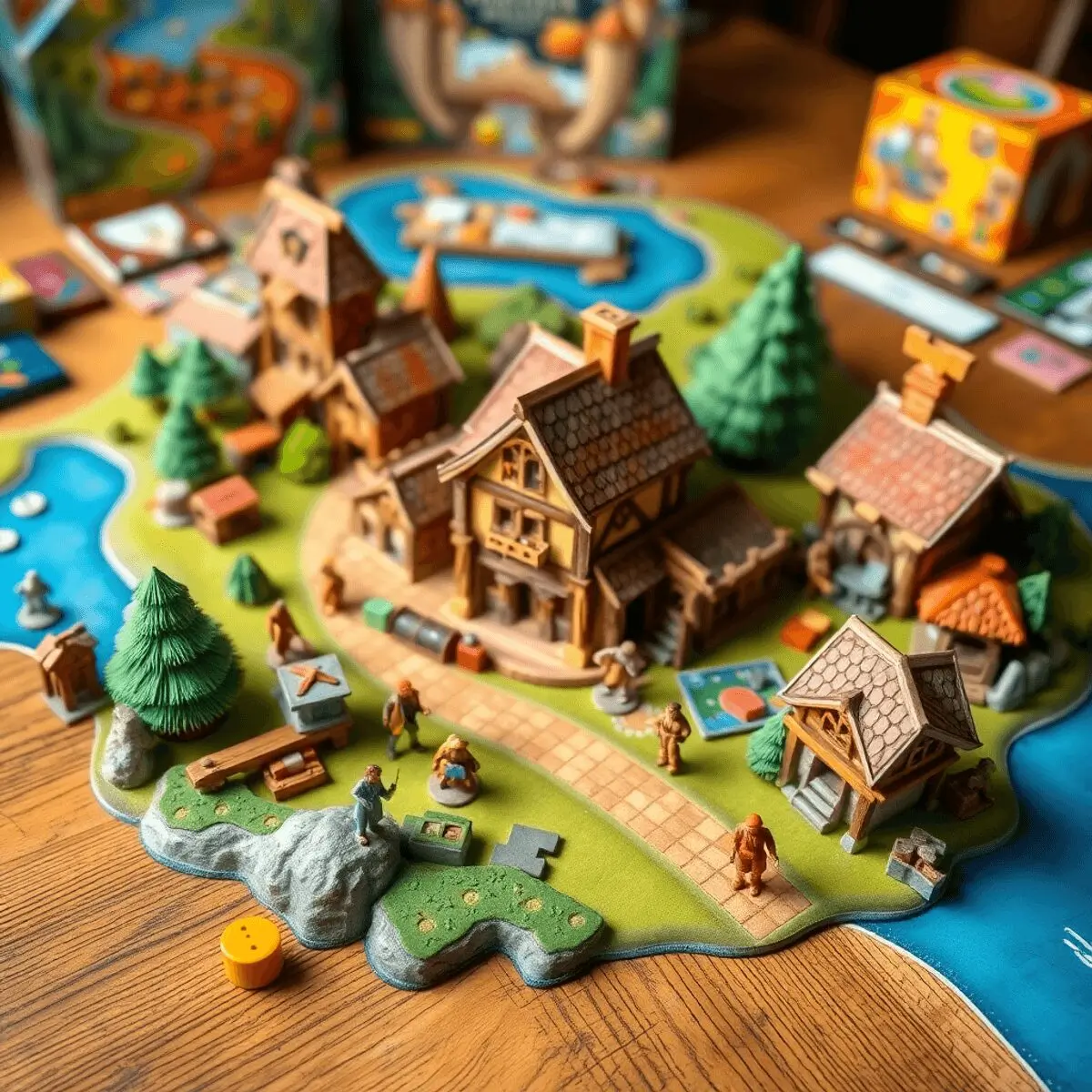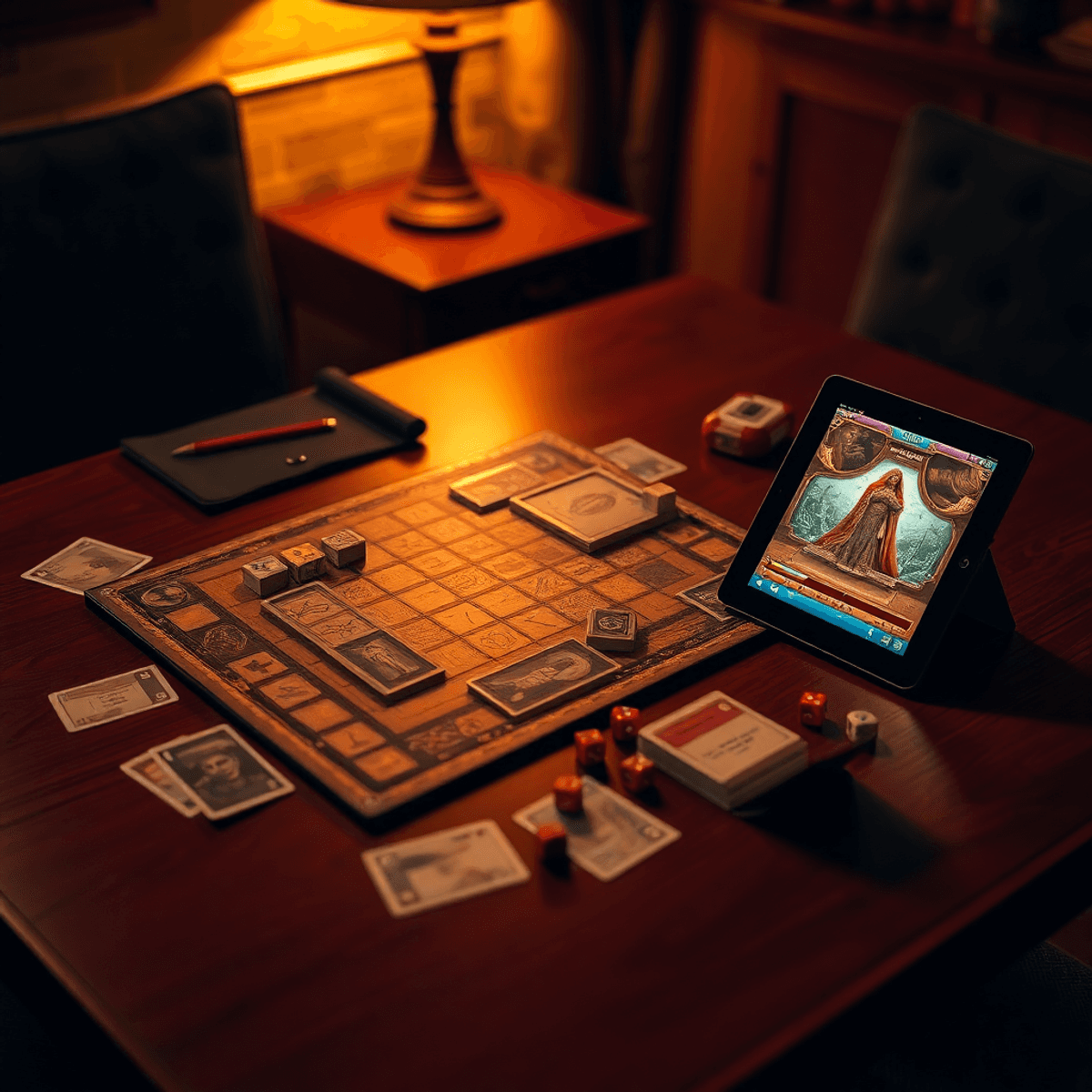
Imagine sitting down at your gaming table, ready to go on an epic adventure. You hear the familiar rustle of cards and the clatter of dice—but there’s something new: the soft glow and hum of a tablet beside the board. Welcome to the era of digital board games integration, where classic tabletop mechanics are enhanced by interactive apps and smart technology to create immersive, hybrid experiences.
The board gaming scene has seen an interesting change with the introduction of digital integration in legacy and campaign-style games. These groundbreaking designs use apps and digital tools to make gameplay better, simplify complicated rules, and create immersive storytelling experiences that cardboard alone couldn’t achieve. To learn more about this trend, check out our exploration into the history and evolution of legacy and campaign-based board games.
Three standout titles showcasing this digital revolution:
- Mansions of Madness (2nd Ed.) – A horror-mystery game where an app replaces the traditional game master
- Destinies – A competitive RPG experience with dynamic storytelling powered by digital technology
- The Adventures of Robin Hood – A narrative-driven adventure utilizing app-based secret reveals
This combination of physical and digital elements brings both opportunities and challenges to the gaming table. Digital integration offers streamlined setup times, automated rule management, and rich multimedia experiences. Yet it also introduces considerations about technology dependence and the preservation of traditional tabletop social dynamics.

Game designers face the intricate challenge of balancing these elements – creating experiences that harness digital advantages while maintaining the tactile charm and social heart of board gaming. Their success in this balancing act shapes the future of how we play together.
As we explore further into this digital age, it’s essential to remember the core mechanics that have shaped our favorite games. From understanding the evolution of dice used in countless board games, to mastering worker placement strategies, or delving into the history and evolution of deck-building games, each aspect plays a vital role in our gaming experiences.
Benefits of Digital-Hybrid Gameplay
Digital companion apps have transformed the modern board gaming experience, offering significant advantages to tabletop gaming:
1. Automated Rule Management
- Instant rule clarifications eliminate rulebook consultations
- Real-time tracking of complex game states and conditions
- Automatic calculation of scores and resource management
- Built-in tutorials for new players
2. Dynamic Storytelling Systems
- Branching narratives adapt to player decisions
- Hidden information revealed at precise story moments
- Multiple story paths create unique replay experiences
- Personalized character development tracking
3. Immersive Multimedia Elements
- Atmospheric background music sets the mood
- Voice-acted narrative segments enhance storytelling
- Sound effects bring actions to life
- Digital artwork complements physical components
4. Streamlined Game Management
- Quick setup and teardown procedures
- Automated enemy behavior and movement patterns
- Save game functionality for campaign progression
- Real-time difficulty adjustments based on player performance
These digital tools transform traditional board games into rich, interactive experiences. Games like Mansions of Madness demonstrate how apps can handle complex enemy AI and scenario management, letting players focus on strategic decisions rather than administrative tasks. The technology serves as an invisible game master, maintaining game flow while preserving the social, tactile nature of board gaming.
Drawbacks of Digital Integration
Digital-hybrid board games face significant challenges that can impact the traditional gaming experience. The integration of technology introduces a dependency on devices that can detract from the cherished tactile elements of board gaming – the satisfying shuffle of cards, the strategic placement of pieces, and the physical interaction with game components.
Technical Disruptions
- Battery drainage during crucial game moments
- App crashes or freezes requiring game restarts
- Compatibility issues with older devices
- Internet connectivity requirements for updates
- Device storage limitations
The learning curve associated with digital integration presents another hurdle. Players must master both physical game mechanics and app navigation. Less tech-savvy players might feel overwhelmed by:
- Multiple menu systems
- Digital interface complexities
- App-specific gestures and controls
- Save state management
- Digital troubleshooting requirements
Traditional board gamers often value the “unplugged” nature of tabletop gaming – a break from screens and digital distractions. The necessity of a device at the table can diminish this escape, creating a constant reminder of our technology-dependent world. Some gaming groups report reduced table talk and social interaction as players focus on app interactions rather than face-to-face engagement.
The preservation of game longevity becomes uncertain when dependent on digital platforms. Apps may become obsolete or incompatible with future operating systems, potentially rendering the physical components unusable without their digital counterpart.
Design Implications for Digital-Hybrid Games
Creating successful digital-hybrid games requires careful consideration of design elements that balance technology with traditional tabletop experiences. Game designers face unique challenges when integrating digital components into physical board games.
Player Agency vs Automation
- Digital apps can handle complex calculations and rule enforcement
- Players need to maintain control over strategic decisions
- Key choices should remain in players’ hands rather than being automated
- Apps work best when managing background mechanics
Physical-Digital Balance
- Physical components must remain central to gameplay
- Apps serve as enhancement tools, not replacement features
- Tactile elements create social interaction opportunities
- Digital features should complement existing mechanics
Adaptive Storytelling Architecture
- Branching narratives respond to player decisions
- Story paths maintain consistency across multiple sessions
- Dynamic content generation keeps scenarios fresh
- Save states preserve campaign progress without disrupting narrative flow
Design Best Practices
- Include offline gameplay options when possible
- Create intuitive app interfaces that minimize disruption
- Build modular systems that scale with expansions – a concept explored in detail in our article on tile placement and modular game design
- Test extensively for technical stability
Game designers who successfully implement these principles create experiences that leverage technology’s advantages while preserving the essence of tabletop gaming. Mansions of Madness (2nd Ed.) demonstrates this balance by using its app to manage complex enemy behavior while letting players control their characters’ actions and strategic choices.
Case Study 1: Mansions of Madness (2nd Edition)
Mansions of Madness (2nd Edition) is a great example of how digital technology can be successfully integrated into modern board games. In this game inspired by Lovecraftian horror, players take on the roles of investigators who explore haunted places, solve mysteries, and fight against otherworldly beings.
The game’s digital companion app has completely changed the way players work together by introducing:
1. Automated Scenario Generation
- Dynamic map layouts
- Randomized item placement
- Varied enemy spawn points
2. Intelligent Enemy AI
- Strategic monster movement
- Context-aware threat responses
- Adaptive difficulty scaling
The app also enhances the storytelling experience with:
- Haunting background sounds
- Professional voice acting
- Interactive puzzle mechanics
- Real-time event triggers
Players are able to interact with both physical game pieces and digital elements in a smooth manner. The physical miniatures, cards, and tokens provide a hands-on experience, while the app takes care of complicated calculations and story progression. This combination allows players to concentrate on making strategic choices instead of getting bogged down by game mechanics.
The digital integration really stands out during investigation scenes. When players search through rooms and interact with objects, the app responds with detailed descriptions, hints, and outcomes. Each scenario unfolds in a different way depending on the decisions made by the players, resulting in one-of-a-kind horror stories that keep the tension high through randomly generated content.
Case Study 2: Destinies Board Game
Destinies brings a fresh twist to competitive storytelling through its digital-hybrid design. Players embark on individual quests in a dark medieval fantasy realm, each pursuing unique destiny objectives that shape their path to victory.
The game’s rich narrative unfolds through the companion app, which reveals:
- Branching story paths based on player choices
- Hidden locations that players discover during exploration
- Character-specific quests tied to each player’s destiny
The app’s persistent world mechanics create a living, breathing universe where past decisions ripple through future gameplay sessions. Players might encounter consequences of their previous choices or discover new opportunities based on their established reputation in different regions.
The dark medieval setting comes alive through:
- Detailed miniatures and map tiles
- Atmospheric sound effects and music
- Dynamic story encounters
- Interactive dialogue choices
Players must balance resource management with strategic decision-making as they navigate through treacherous territories. The app tracks individual progress, maintains inventory systems, and orchestrates complex narrative threads without bogging down the physical gameplay experience.
Destinies stands out by offering asymmetrical victory conditions – while players share the same game world, their paths to success differ dramatically based on their chosen destiny cards and the choices they make throughout their journey.
Case Study 3: The Adventures of Robin Hood in Unmatched Series
The Adventures of Robin Hood brings a fresh twist to asymmetrical combat through its digital integration. Each hero in the game possesses distinct abilities that mirror their legendary characteristics:
- Robin Hood excels at ranged combat with precise archery mechanics
- Little John dominates close-quarter battles with strength-based abilities
- Will Scarlet specializes in swift, tactical movements
- Maid Marian employs cunning strategies and deception

Enhancing Gameplay with Digital Integration
The digital companion app transforms traditional gameplay by enabling:
- Real-time tracking of hero abilities and power usage
- Dynamic scenario adjustments based on player choices
- Automated combat resolution while maintaining tactical depth
Revolutionizing Multiplayer Accessibility
The game’s online matchmaking system has revolutionized multiplayer accessibility. Players can:
- Join global tournaments
- Create custom matches with specific rule sets
- Track their performance statistics
- Connect with the international Unmatched community
Preserving Tradition while Embracing Technology
The digital platform preserves the tactile experience of moving miniatures and managing cards while enhancing gameplay through seamless integration of technology. This hybrid approach creates an immersive experience that captures the spirit of Sherwood Forest’s legendary tales.
Engaging Solo Play with AI Opponents
The app’s AI opponents offer varied difficulty levels, making solo play engaging and challenging. These digital adversaries adapt their strategies based on the chosen hero, ensuring each matchup feels unique and true to the source material.
Conclusion
Digital board games integration marks a transformative shift in the world of tabletop gaming. Legacy-style games like Mansions of Madness, Destinies, and The Adventures of Robin Hood showcase how digital tools can enrich gameplay through app-driven storytelling, streamlined rule management, and immersive audio-visual enhancements. These games demonstrate that when used thoughtfully, technology can elevate traditional board games without replacing their tactile charm.
The future of digital-hybrid gameplay appears promising, with designers finding innovative ways to:
- Blend physical and digital elements seamlessly
- Create more dynamic, responsive storytelling experiences
- Expand accessibility through automated rule systems
- Foster community engagement through online features
Even as digital board games integration continues to evolve, the soul of tabletop gaming still resides in its tangible components, face-to-face interactions, and memorable moments shared around the table. The most effective digital integrations will remain those that enhance—not overshadow—the core experience, providing new layers of engagement while preserving the essence of board play.
As technology evolves, we can expect to see more sophisticated implementations that push the boundaries of what’s possible in tabletop gaming while preserving the unique charm that draws people to board games in the first place.