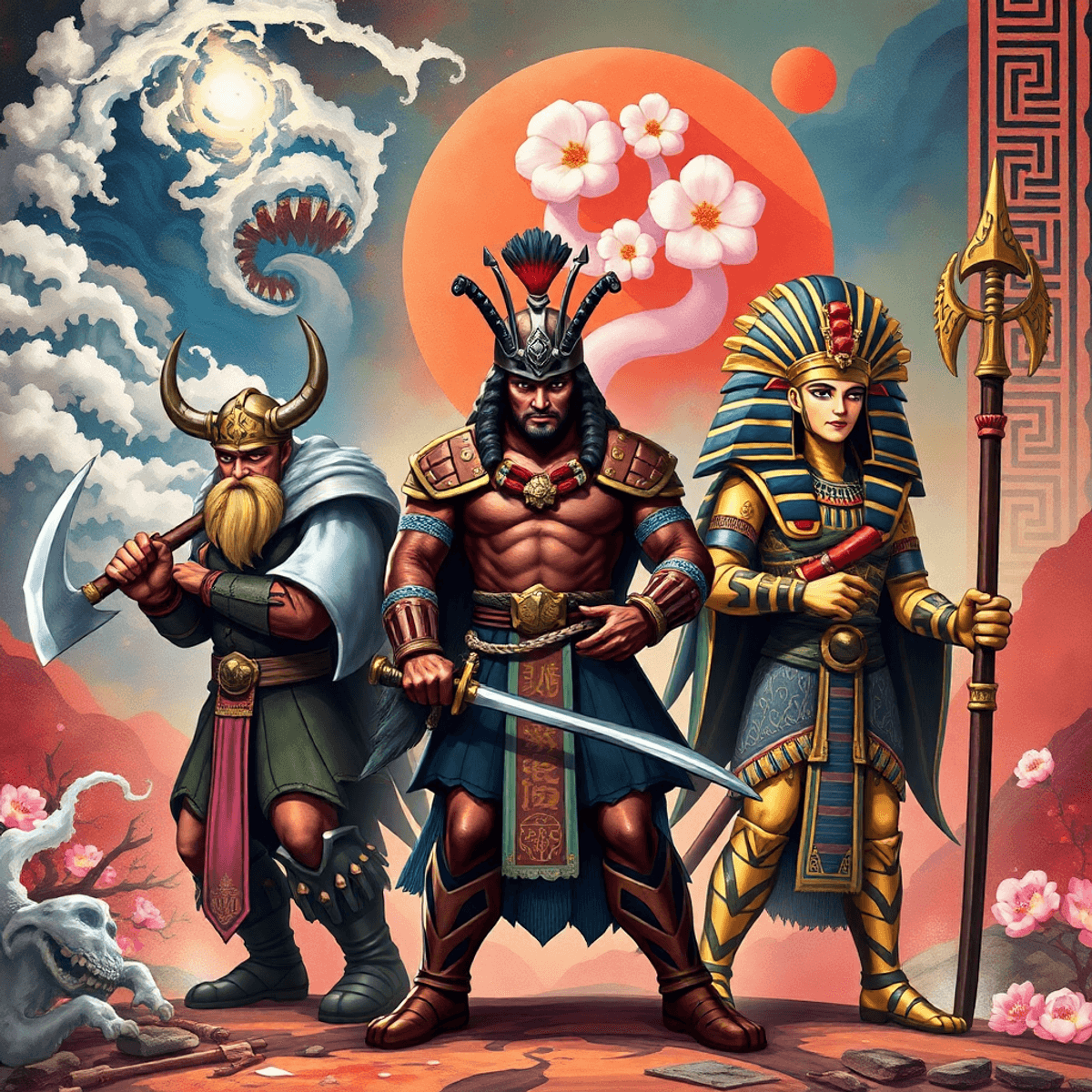
Imagine this: You’re a Viking clan leader getting ready for the end of the world, a Japanese daimyo making delicate alliances, or an Egyptian god fighting to survive in a world that’s forgetting you. This isn’t just make-believe—it’s the universe of Eric M. Lang, one of board gaming’s most innovative designers.
Lang has built a legendary reputation by combining rich mythological stories with asymmetric mechanics that make every game feel new and unpredictable. His “mythic trilogy”—Blood Rage, Rising Sun, and Ankh: Gods of Egypt—doesn’t just place plastic miniatures on a board. These games take players into fully realized worlds where Viking warriors clash during Ragnarok, samurai navigate political intrigue, and ancient gods battle for importance.
What makes Lang stand out isn’t just the stunning artwork or grand themes. It’s how he uses asymmetry to create strategic depth, forcing players to think differently based on their faction’s special abilities and playstyle. This design philosophy is similar to traditional board games from various cultures, which reveal their significance and the rich traditions behind them.
Furthermore, Lang’s work also reflects the influence of forgotten board games that have shaped modern classics, impacting mechanics, themes, and diverse player experiences. His games also hint at the history and evolution of legacy and campaign-based board games, exploring popular titles that redefine gameplay.
Finally, Lang’s thematic exploration can be seen as a reference to the rich history of ancient and medieval board games from Egypt, Mesopotamia, China, and Rome, which hold significant cultural value today. How does this design philosophy turn a simple board game into an unforgettable experience that keeps players coming back for more?
Eric M. Lang: A Profile of Innovation and Thematic Depth
Eric M. Lang has been a creative force in the board gaming industry for decades. With over 100 published titles to his credit according to BoardGameGeek, Lang has established himself as one of the most prolific and influential games designers working today. His career took off in the early 2000s with licensed properties like Dune and A Game of Thrones, where he honed his ability to translate rich fictional universes into compelling game mechanics.
Early Career and Licensed Properties
Lang’s early work on licensed properties allowed him to develop his skills in adapting existing stories and worlds into engaging gameplay experiences. This experience would later inform his original designs, where he would have more freedom to create unique narratives.
Partnership with CMON Limited
Lang’s reputation grew further through his collaboration with CMON Limited, where he created the mythic trilogy that would define his signature style. This partnership allowed him to explore larger themes and epic storytelling in his games, while also incorporating innovative mechanics.
Narrative Depth and Mechanical Precision
One of Lang’s defining qualities as a designer is his ability to combine narrative depth with mechanical precision. Each game he creates tells a story not just through its theme but also through how players interact with its systems. He believes that mechanics are an integral part of storytelling, with every rule reinforcing the world players inhabit.

Impact on Area Control Games
Lang’s influence on “Dudes on a Map” (DoaM) area control games cannot be overstated. He took what was once a straightforward genre of territorial conquest and added layers of complexity and nuance.
Key Innovations in DoaM Design
- Asymmetric powers: By giving each player unique abilities, Lang introduced strategic diversity and encouraged players to think outside the box.
- Diplomatic systems: Lang recognized that conflict doesn’t always have to be resolved through direct confrontation. By incorporating negotiation and alliances into his designs, he added an extra layer of strategy.
- Thematic event structures: Events are a powerful tool for shaping gameplay dynamics. Lang used thematic events to create memorable moments and reinforce the narrative arc of his games.
Legacy and Inspiration
Lang’s designs proved that area control could be both tactically deep and thematically resonant. His work inspired a new generation of designers who sought to blend strategy with storytelling in their own creations.
Eric M. Lang journey through board gaming is one marked by innovation, creativity, and an unwavering commitment to pushing boundaries. Through his designs, he continues to shape the industry while inspiring others along the way.
Thematic Mastery: Exploring Mythology and Narrative in Lang’s Games
Eric M. Lang mythic trilogy stands as a testament to the power of thematic board games rooted in ancient lore. Each installment transports players to a different cultural landscape: Blood Rage plunges them into the apocalyptic fury of Viking Ragnarok, Rising Sun unveils the political intrigue of feudal Japan’s kami and clans, and Ankh chronicles the desperate struggle of Egyptian gods fighting for survival as monotheism threatens their existence. These aren’t just settings painted onto generic mechanics—they’re living, breathing worlds where every card, miniature, and game action reinforces the mythological themes at their core.
Immersion through Visual Presentation
The visual presentation of Lang’s games creates immediate immersion. CMON Limited’s collaboration with artists like Adrian Smith (Blood Rage) and Studio McVey has produced stunning miniatures that capture the essence of each mythology. The art direction goes beyond aesthetics—it tells stories.
- Blood Rage’s grim, weathered warriors reflect the fatalistic Norse worldview.
- Rising Sun’s elegant figures embody the refinement of Japanese culture.
- Ankh’s towering god miniatures communicate divine power through sheer scale and intricate detail.
Deepening Connection through Faction Lore
Faction lore deepens this connection. Players don’t just move pieces—they embody Bear Clan berserkers charging into glorious death, negotiate as cunning Koi clan diplomats, or wield the sun god Ra’s dominion over the desert. Each faction’s unique backstory and abilities create distinct narrative experiences.
When a player sacrifices their warriors for glory points in Blood Rage, they’re not making an abstract tactical choice—they’re honoring the Viking belief that dying in battle guarantees entry to Valhalla.
Transforming Decisions into Emotional Moments
This narrative richness transforms strategic decisions into emotional moments. Players remember the game where their underdog god merged with an ally to challenge the pantheon’s leader, not just because it was mechanically clever, but because it felt like an epic mythological event unfolding at their table.
Asymmetry as a Core Design Philosophy
Asymmetric board games give each player unique starting positions, abilities, or victory conditions—no two factions play exactly alike. This design approach transforms every game session into a fresh puzzle where players must master their faction’s distinctive strengths while navigating opponents’ unpredictable strategies. Eric M. Lang games have become synonymous with this philosophy, using asymmetry as the foundation for creating deeply replayable experiences that reward both tactical mastery and creative problem-solving.
Asymmetry in Blood Rage
Blood Rage demonstrates this principle through clan-specific abilities that fundamentally alter how players approach combat and territory control. One clan might excel at dying gloriously in battle (earning points for fallen warriors), while another dominates through pillaging and resource accumulation. These divergent paths force players to recognize that winning looks different for each faction—what appears to be a losing position for one clan might be a strategic goldmine for another.
Asymmetry in Rising Sun
Rising Sun takes asymmetry into the social realm. Each clan possesses unique diplomatic advantages and combat bonuses, but the alliance system creates temporary power blocs that shift the strategic landscape each round. A militarily weak clan can leverage diplomatic prowess to ride the coattails of stronger allies, turning perceived weakness into political advantage.
Asymmetry in Ankh: Gods of Egypt
Ankh: Gods of Egypt pushes asymmetry to its extreme with gods whose powers shape entirely different gameplay experiences. Ra’s sun-based mechanics contrast sharply with Anubis’s death-focused strategies. The merge mechanic adds another layer—two struggling gods can combine their unique abilities, creating hybrid strategies that didn’t exist at the game’s start. Players must constantly reassess their approach as the board state evolves and new strategic possibilities emerge through these divine partnerships.
Case Studies of Key Games by Eric M. Lang
Blood Rage: Viking Mythology Meets Tactical Warfare
The Blood Rage board game is a great example of how Lang uses strong themes and uneven mechanics in games like Blood Rage to create unforgettable gaming experiences. Set against the backdrop of Ragnarok—the Norse apocalypse—players lead Viking clans competing for glory before the world ends. This thematic foundation isn’t just for show; it influences every mechanical decision in the game.
At its core, Blood Rage revolves around area control across the nine realms of Norse mythology. Players draft cards that represent warriors, upgrades, and mythical monsters to strengthen their clans. The drafting phase creates tension as players must anticipate their opponents’ strategies while building their own power base. Each of three ages brings new cards and opportunities, with increasingly powerful options appearing as Ragnarok approaches.
Blood Rage board game mechanics shine through the game’s combat system. When clans clash, players secretly commit cards and figures to determine the outcome. Victory isn’t always about winning battles—dying gloriously in combat can earn substantial glory points, reflecting the Viking warrior ethos. This design choice creates fascinating psychological warfare where players must read their opponents’ intentions and decide whether fighting or dying serves their strategy better.
Asymmetry in Blood Rage
The asymmetry in Blood Rage manifests through clan-specific abilities that fundamentally alter how each player approaches the game. One clan might excel at pillaging villages, gaining resources and glory through calculated raids. Another could specialize in quest completion, earning points through specific achievements rather than direct confrontation. A third might focus on dying in battle, turning what seems like defeat into a path to victory. These distinct clan powers force players to adapt their strategies based on their chosen faction’s strengths.
The upgrade system adds another layer of asymmetry. Players can enhance their clan’s statistics—increasing combat strength, movement range, or starting resources. These permanent improvements stack throughout the game, allowing players to specialize their clans in unique directions. One player might create a mobile strike force capable of rapid deployment, while another builds an immovable defensive powerhouse.
Ragnarok events punctuate each age,
Rising Sun: Diplomacy and Alliances in Feudal Japan
The Rising Sun board game shifts the battlefield from Viking raids to the political landscape of feudal Japan, where negotiation becomes as powerful as military might. Lang introduces a groundbreaking alliance mechanic that fundamentally changes how players approach area control. Before each season’s battles, players form temporary partnerships through a bidding system, creating dynamic power blocs that reshape the strategic landscape.
These alliances aren’t just for show—they directly impact gameplay through shared benefits during conflicts. Allied players coordinate their forces, split rewards, and gain tactical advantages that solo players cannot access. This mechanic creates a delicate balance: trust your ally too much, and they might betray you when the alliance dissolves; refuse cooperation entirely, and stronger coalitions will overwhelm you.
The Rising Sun board game diplomacy mechanics interweave seamlessly with Japanese mythology and bushido honor codes. Each clan embodies different aspects of feudal Japanese culture, from the disciplined Koi to the deceptive Lotus. The game’s asymmetry manifests through unique clan abilities that influence diplomatic strategies—some clans excel at manipulating alliances, while others benefit from honorable solo play.
Political intrigue meets divine intervention as players honor Shinto kami through seasonal mandates, earning favor that translates into concrete advantages. This thematic integration transforms every negotiation into a narrative moment, where backstabbing feels like authentic feudal drama rather than abstract mechanics.
Ankh: Gods of Egypt – Innovation Through Mythical Conflict and Cooperation
Ankh: Gods of Egypt completes Lang’s mythic trilogy with perhaps his boldest thematic and mechanical statement yet. The game captures ancient Egypt’s dramatic shift from polytheism to monotheism, where multiple deities compete for the devotion of a population that can only sustain belief in one god. This existential struggle translates directly into gameplay—players must prove their god’s supremacy or face being forgotten by history.
The merge mechanic in the Ankh board game stands as one of Lang’s most innovative design choices. When two gods fail to maintain sufficient devotion, their players can choose to merge, combining their forces and coordinating actions for the rest of the game. This creates fascinating strategic possibilities: former rivals become partners, pooling resources and abilities to challenge the leading deity. The merge mechanic adds layers of negotiation, timing decisions, and comeback potential that few area control games attempt.
Each Egyptian god brings radically different playstyles that push asymmetry beyond what Blood Rage or Rising Sun achieved. Anubis excels at controlling the underworld and manipulating death, while Ra dominates through raw power and sun-based abilities. Amun operates through hidden influence, and Osiris spreads control through monuments. These distinct approaches force players to master entirely different strategic paths, with no two gods feeling remotely similar in execution or tactical priorities.
For a deeper understanding of the game’s mechanics and overall experience, you might find this review helpful.
Visual Design and Player Engagement in Eric M. Lang’s Games
Eric M. Lang’s games are not only mechanically deep but also visually stunning. The visual presentation is more than just decoration—it’s an essential part that draws players into the game world even before they read the rules. When you open a box of Blood Rage, Rising Sun, or Ankh, the intricately designed miniatures instantly convey the scale and intensity of the conflicts you’re about to experience.
Miniatures as Functional Art
The miniatures in these games serve a dual purpose: they are both functional game pieces and works of art. Each clan in Blood Rage has its own set of Viking warriors, each with distinct poses and equipment that reflect their mythological origins. In Rising Sun, the figures showcase intricate details like flowing robes and ceremonial armor, capturing the aesthetic traditions of feudal Japan. Ankh takes this concept further by featuring towering god figures—Anubis holding his scales of judgment, Ra spreading his sun-disk wings across the board. These miniatures are not generic playing pieces; they are sculptural representations that reinforce each faction’s identity and strategic role.
Immersive Board Artwork
The artwork on the game boards creates immersive battlegrounds that enhance the thematic experience. The map in Blood Rage depicts a crumbling Norse world engulfed in flames from Ragnarok. Rising Sun presents a stylized Japanese landscape adorned with cherry blossoms and sacred shrines. In Ankh, the board transforms the Nile River into a contested territory where divine power ebbs and flows with each season.
Narrative Through Card Art
The art on the cards deserves special recognition for how it weaves narrative elements throughout gameplay. Each upgrade card in Blood Rage features Norse symbols and runes, while Rising Sun‘s political mandate cards depict scenes of courtly intrigue and battlefield honor. These visual cues not only help players remember abilities but also maintain the game’s mythological atmosphere. The color palettes used—cool blues and whites for Norse ice, warm reds and golds for Japanese honor, earthy tones for Egyptian deserts—create distinct visual identities that make each game instantly recognizable at a glance.
Impact on Modern Board Game Culture and Legacy
Eric M. Lang’s design philosophy has had a significant impact on the hobby gaming industry, inspiring a new generation of designers to embrace asymmetry as more than just a gimmick. His success with the mythic trilogy demonstrated that players crave experiences where each session feels genuinely different based on faction choice. Designers like Cole Wehrle (Root, Pax Pamir) and Jamey Stegmaier (Scythe) have acknowledged the importance of asymmetric design in creating memorable gaming moments, a trend Lang helped accelerate into mainstream acceptance.
Redefining Strategy Games
The influence of Eric M. Lang goes beyond game mechanics; it also shapes how the community views strategy games. He found a middle ground between traditional Eurogames’ efficiency puzzles and Ameritrash games’ reliance on dice. His work demonstrated that narrative-driven strategy games could provide both thematic immersion and tactical depth without compromising either aspect. In Blood Rage, for example, the clan powers are not merely decorative—they fundamentally change how you approach every decision on the board.
Setting New Expectations
This approach has transformed modern board game experiences by establishing new standards. Players now actively seek games where their chosen faction or character feels significantly different from their opponents. Publishers are aware of this demand, resulting in a surge of asymmetric designs across various genres. Lang didn’t just create successful games; he helped establish a design language that characterizes contemporary hobby gaming, where theme and mechanics complement each other instead of competing for attention.
The Evolution of Game Elements
Moreover, his influence also extends to the development of specific game components, such as dice. This exploration into the history and evolution of dice in board games reveals their significant impact on gameplay and strategy, further showcasing Lang’s broad influence on the industry.
Conclusion
Eric M. Lang is a leading figure in modern board game design, showing that thematic board games can offer both rich storytelling and complex strategies. His skillful use of asymmetric mechanics turns every game into a one-of-a-kind tactical challenge, where cultural myths influence every choice made by the players.
The mythic trilogy—Blood Rage, Rising Sun, and Ankh: Gods of Egypt—is more than just a series of successful games. These titles showcase how careful blending of theme and mechanics can enhance player experiences beyond mere competition, creating unforgettable storytelling moments. Whether you’re leading Viking clans during Ragnarok, forming political alliances in feudal Japan, or fighting for dominance as an Egyptian god, Lang’s designs invite you to fully immerse yourself in these worlds.
Which part of his design philosophy resonates with you? The intense excitement of asymmetric powers? The captivating allure of ancient myths? Or maybe it’s the way his games promote lively player interaction and adaptability. Choose one of his games and find out why Eric M. Lang continues to redefine our understanding of thematic board games and strategic depth in contemporary gaming.