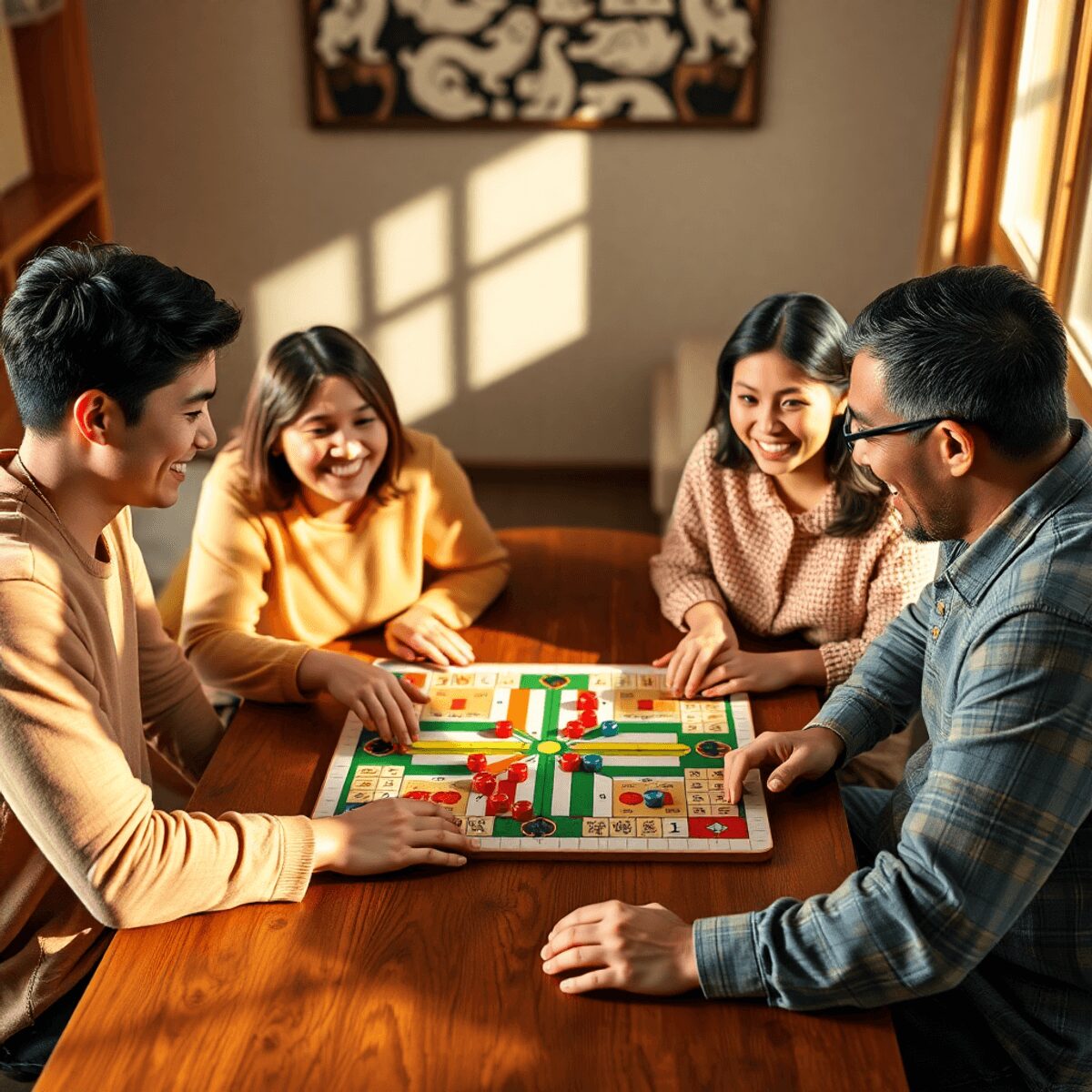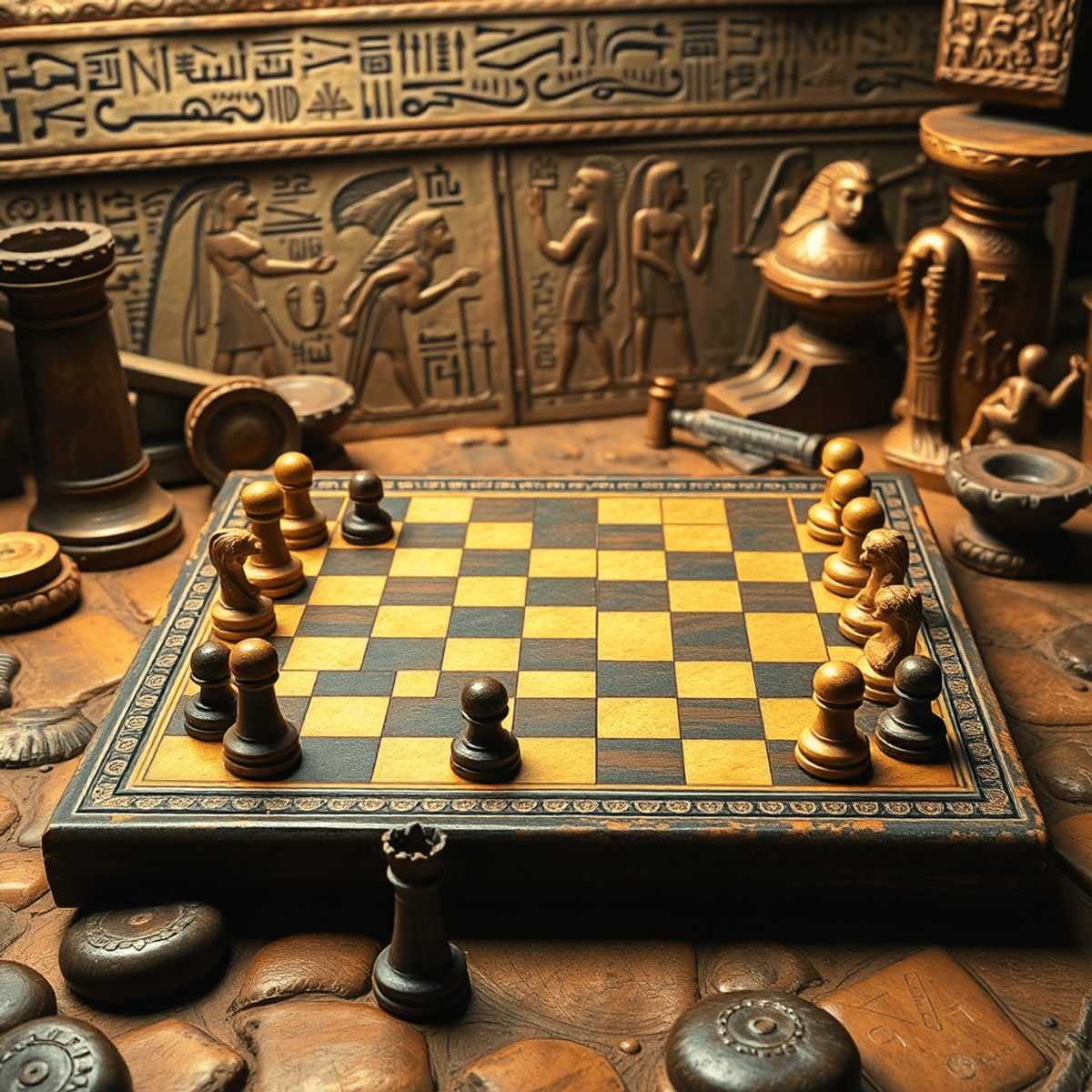
The history of checkers game reveals a timeless journey through human civilization. Also known as Draughts in many parts of the world, Checkers is a game that has captivated minds and sparked friendly competition for thousands of years. Its simplicity masks a strategic depth that has kept players engaged across generations and cultures.
This deceptively simple game has woven itself into the fabric of human culture. From ancient Egyptian palaces to modern digital platforms, Checkers has evolved while maintaining its core appeal: accessibility paired with strategic depth.
The game’s journey through time is a fascinating tale of cultural exchange and adaptation. Its roots stretch back to the banks of the Nile, where similar board games emerged in ancient Egypt around 2700 B.C. From there, it spread across continents, with each culture adding its own unique twist to the rules and gameplay.
This article delves into the rich history of Checkers game, exploring its Egyptian origins, diverse rule variations, and the factors that transformed it into one of the world’s most beloved abstract strategy games.
Ancient Origins of Checkers
The game of Checkers has a rich history, with its origins dating back to ancient times. Archaeological discoveries have revealed fascinating insights into the game’s beginnings.
Early Beginnings in Mesopotamia and Egypt
Artifacts found in the city of Ur, dating back to 3000 BCE, suggest that a precursor to Checkers was played in ancient Mesopotamia. Additionally, gaming boards and pieces unearthed from Egyptian tombs indicate that a similar game existed in Ancient Egypt around 2700 BCE.

The Influence of Alquerque
One of the direct ancestors of modern Checkers is Alquerque, an ancient board game played on a unique cross-hatched board. This strategic game featured:
- A 5×5 grid with diagonal lines
- Pieces that moved along the intersecting points
- Capture mechanics similar to modern Checkers
- Rules requiring diagonal movements
The transformation from Alquerque to modern Checkers occurred during the 12th century in the South of France. Players adapted the game to a standard chess board, creating what became known as “Fierges” or “Ferses.” This adaptation introduced:
- An 8×8 square board layout
- 12 pieces per player
- Mandatory capture rules
- The concept of crowned pieces
Connections to Ancient Egyptian Games
Ancient Egyptian hieroglyphs depict people playing board games that bear striking similarities to modern Checkers. One such game, Senet, discovered in Tutankhamun’s tomb, shares key elements with today’s Checkers:
- Two-player competitive gameplay
- Piece movement across a defined board
- Strategic capture mechanics
- Victory through piece elimination
Evolution Through Civilizations
Numerous archaeological findings trace Checkers’ evolution through ancient civilizations, as documented by BoardGameGeek’s historical games database. These discoveries highlight the game’s presence in various cultures, including Mesopotamian, Ancient Greek, Roman military camps, and early Middle Eastern settlements.
Interestingly, despite the variations across these ancient cultures, the basic principles of Checkers remained remarkably consistent. This demonstrates the game’s universal appeal and strategic depth.
Insights into Ancient Gameplay
Archaeological evidence suggests that ancient players developed sophisticated tactics in their gameplay. Some gaming boards have shown worn patterns indicating frequent use and established playing styles.
These findings are part of a broader exploration into ancient and medieval board games, which reveals their cultural significance today. Furthermore, the study of traditional board games worldwide showcases their unique traditions and regional variations.
For those interested in understanding more about the historical context surrounding these ancient games and their evolution over time, I recommend exploring this comprehensive document on the historical significance of various cultures. It provides valuable insights into how these ancient games like Checkers have shaped our understanding of strategy and competition
Rule Variations and Global Adaptations
The terms “Draughts” and “Checkers” represent distinct regional interpretations of this classic board game. While Americans know the game as Checkers, British and Commonwealth nations call it Draughts. These naming differences reflect deeper variations in gameplay mechanics across regions.
Key Regional Variations:
1. American Checkers (8×8 board)
- Single pieces move diagonally forward
- Kings can move backward
- Mandatory captures
- 12 pieces per player
2. International Draughts (10×10 board)
- Larger playing field
- Flying kings with extended movement range
- Multiple capture sequences allowed
- 20 pieces per player
3. Russian Draughts (8×8 board)
- Kings can move multiple squares
- Backward captures allowed for regular pieces
- Different starting positions
Cultural adaptations have shaped unique rule sets across continents. Asian variants introduce distinctive elements:
- Malaysian Checkers: 12×12 board size, complex capture patterns, special promotion rules
- Turkish Draughts: Pieces move orthogonally instead of diagonally, unique capture mechanics, different initial piece arrangement
These variations reflect local gaming traditions and preferences. The Spanish version (Damas) allows backward captures for regular pieces, while Canadian Checkers uses a larger board with modified movement rules. Brazilian Checkers incorporates elements from both International and American variants, creating a hybrid ruleset popular in South America.
The game’s adaptability has led to specialized tournament versions. The World Checkers/Draughts Federation recognizes multiple official variants, each with standardized rules for competitive play. This flexibility has helped preserve the game’s relevance across different cultures while maintaining its core strategic elements.
Accessibility and Enduring Popularity
Checkers is a game that has stood the test of time, and its appeal lies in its perfect balance of simplicity and strategic depth. Unlike complex strategy games that require players to memorize extensive rules, Checkers welcomes players with straightforward mechanics that can be learned in minutes.
This accessibility creates a unique gaming experience where:
- Equal Starting Ground: New players can quickly grasp basic concepts and compete
- Progressive Learning Curve: Skills develop naturally through gameplay
- Cross-Generational Appeal: Children and adults can play together competitively
The game’s enduring popularity comes from the psychological rewards it offers. Each match presents multiple decision points that lead to satisfying “aha” moments when players discover advantageous moves or recognize patterns. This combination of quick learning and deep strategy keeps players engaged regardless of their skill level.
Checkers also thrives as a social activity. The face-to-face nature of the game encourages:
- Direct player interaction
- Non-verbal communication through moves
- Friendly competition
- Development of critical thinking skills
The game’s minimal equipment requirements – just a board and pieces – make it accessible across economic barriers. This universal availability has helped Checkers maintain its position as a beloved pastime in homes, schools, parks, and community centers worldwide.

Gameplay Mechanics and Strategic Depth
The basic rules of Checkers create a wide range of strategic options. Players move their pieces diagonally across the board, capturing opponent pieces by jumping over them. This simple rule set leads to complex decision-making situations as games progress.
Basic Movement Patterns:
- Single pieces move forward diagonally
- Captured pieces are removed from the board
- Multiple jumps must be completed in a single turn
- Players must capture when the opportunity exists
The introduction of kinged pieces changes the way the game is played. When a piece reaches the opposite end of the board, it becomes a king, gaining the ability to move both forward and backward. This increased movement flexibility creates new tactical opportunities and defensive challenges.
Strategic Elements of Kinged Pieces:
- Control of back rows becomes crucial
- Kings can trap opponent pieces more effectively
- The threat of backward captures influences piece positioning
- Kings enable complex multi-jump combinations
Expert players have developed advanced strategies that make use of these mechanics. One important concept in high-level play is “opposition,” which involves controlling specific squares to force your opponent to move in a certain way. Players also use techniques such as:
- The Bridge – Using two pieces to block opponent advancement
- The Shot – Sacrificing pieces to create winning combinations
- The Mill – Creating a continuous cycle of jumps
- The Block – Controlling key squares to limit opponent mobility
These strategies often require careful sacrifices and trading of positions in order to gain better control of the board. Expert players think several moves ahead, considering different possible sequences and their outcomes. The balance between aggressive captures and defensive positioning creates an ongoing struggle that defines high-level Checkers play.
The game’s depth comes from these complex strategic elements, where each move can have far-reaching effects. Players must constantly assess the trade-off between immediate tactical benefits and long-term strategic positioning, especially when it comes to creating and using kinged pieces.
The Global Spread of Checkers
Checkers has spread across the world due to its simplicity and adaptability. The game’s easy-to-understand rules make it possible for new players to learn the basics in just a few minutes, making it appealing to people of all ages and backgrounds. This accessibility has made Checkers a popular choice for social gatherings, family game nights, and casual play.
Cultural Adaptations
Different regions have embraced and modified Checkers to suit local preferences:
- American Checkers – Played on an 8×8 board with 12 pieces per player
- International Draughts – Utilizing a larger 10×10 board with 20 pieces each
- Turkish Draughts – Features unique movement patterns and board setup
- Russian Draughts – Incorporates distinctive capturing rules
The Impact of Digital Technology
The digital age has transformed how people play Checkers. Online gaming platforms and mobile apps have opened up new opportunities for players to:
- Connect with opponents worldwide
- Learn advanced strategies through tutorials
- Participate in virtual tournaments
- Track their progress and rankings
Popular gaming websites now host millions of Checkers matches annually, while artificial intelligence programs offer challenging computer opponents for solo practice. Mobile apps have made the game portable, allowing players to enjoy quick matches during commutes or breaks.
The Role of Social Media
Social media and streaming platforms have created vibrant communities around Checkers, where players can:
- Share strategies
- Discuss variations
- Organize online events
These digital spaces have introduced younger generations to the classic game while preserving its competitive spirit.
Further Exploration into Board Game History
The history of checkers game opens a fascinating window into the evolution of human play. Like Senet, The Royal Game of Ur, and Mancala, Checkers has endured for centuries, reflecting the cultural values and intellectual curiosity of the societies that embraced it. Its legacy continues to influence abstract strategy games today.
However, the journey into board game history doesn’t stop at these ancient games. The evolution of board games is a testament to human creativity and adaptability. For instance, exploring how forgotten board games shaped modern classics can provide valuable insights into the mechanics, themes, and diverse player experiences that define today’s gaming landscape.
Ready to dive deeper? Here are some starting points for your board game history journey:
- Archaeological discoveries – Museum collections worldwide showcase preserved game pieces and boards that reveal how our ancestors played
- Cultural anthropology – Study how different societies developed their own unique games and rule systems
- Game evolution – Track how classic games transformed across regions and time periods
- Strategic development – Examine how game mechanics influenced military strategy and decision-making throughout history
Moreover, understanding the golden age of board games during the mid-20th century can shed light on the mass-market classics and innovations that have significantly influenced modern gaming trends.
When we explore the history of checkers game, we uncover more than just a pastime—we discover a living link to our shared past. Whether you’re a casual player or a dedicated enthusiast, understanding the historical roots of Checkers and other ancient games adds new layers of meaning to every move you make on the board.