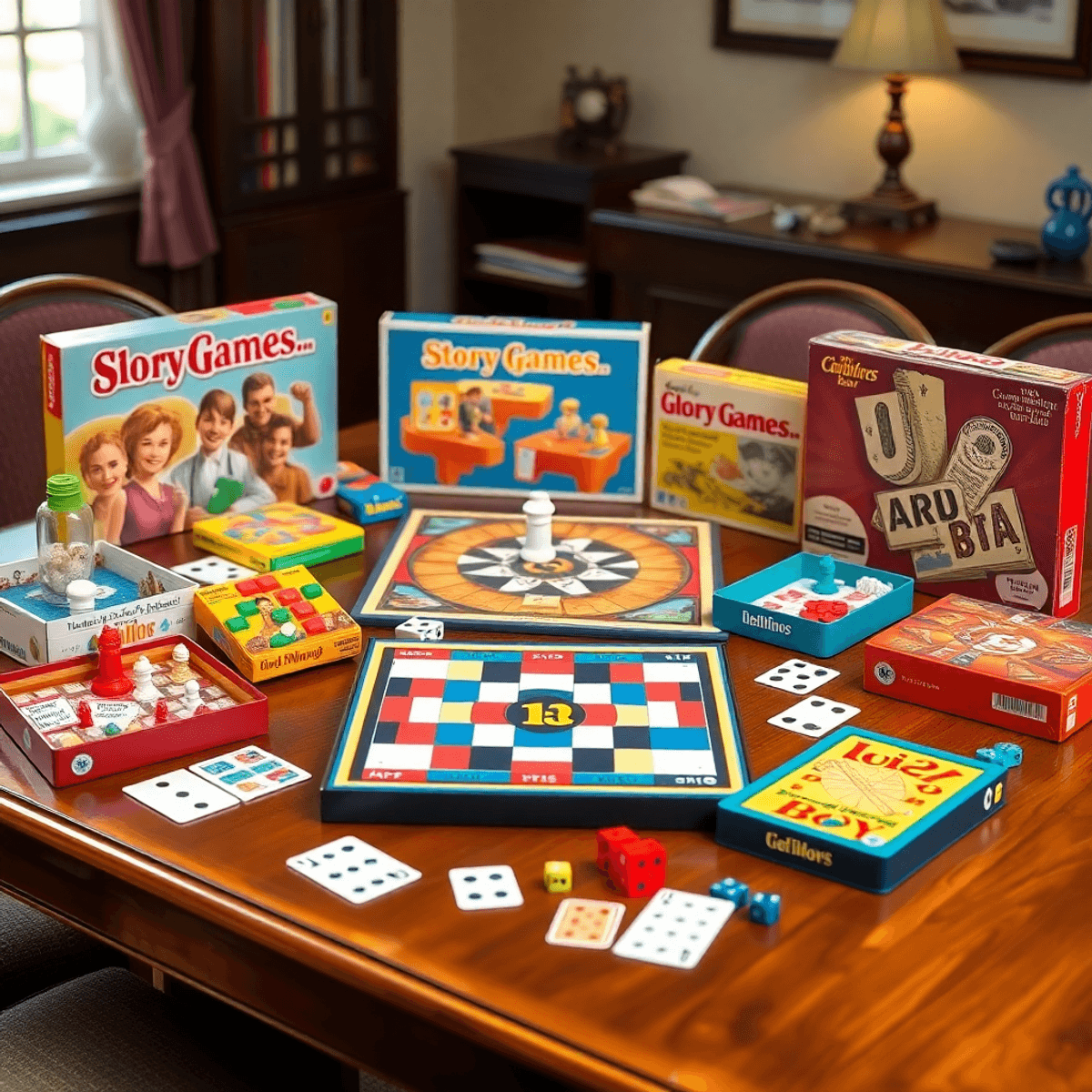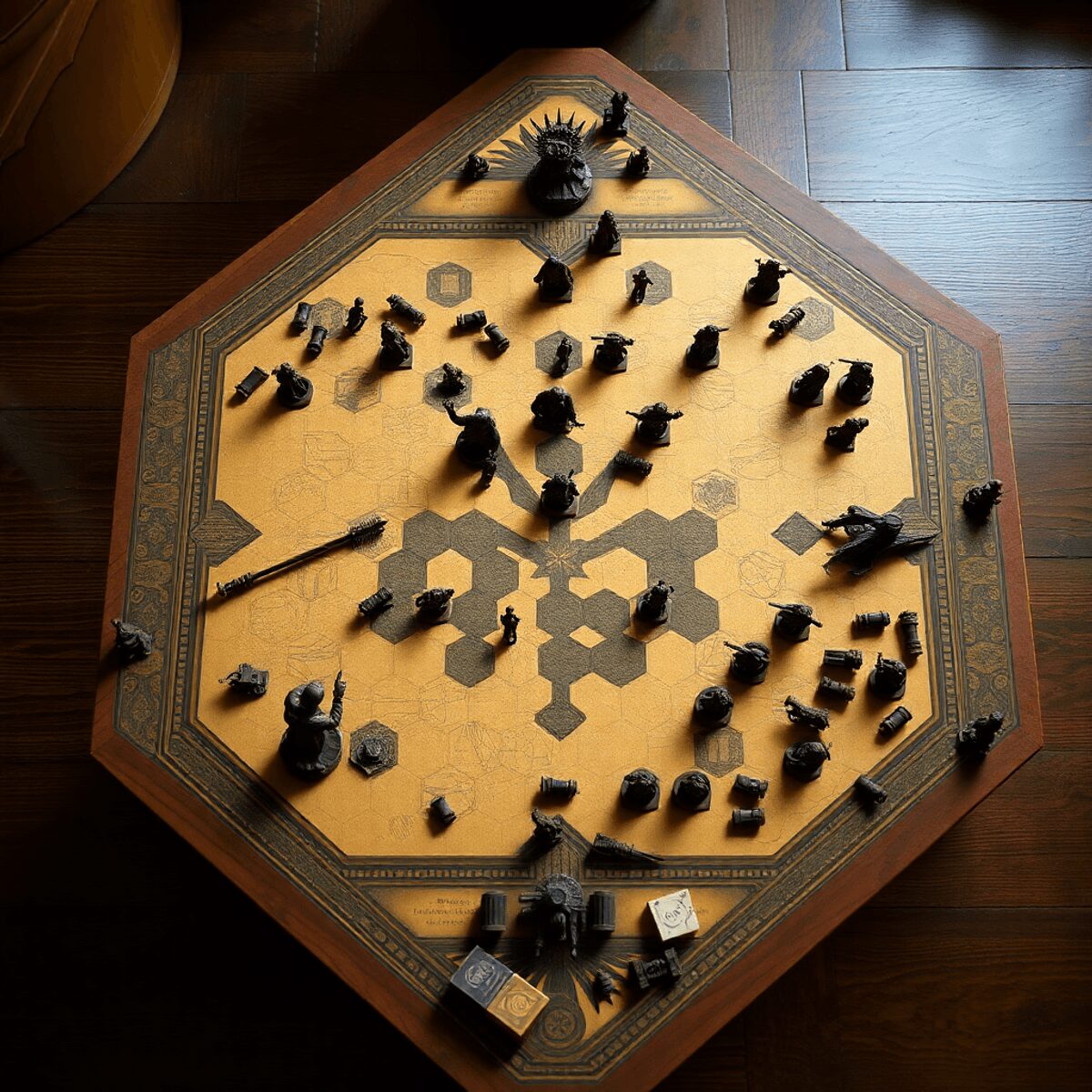
Classic strategy games hold a special place in board gaming history, where timeless titles continue to challenge and captivate players across generations. The Stratego board game, a true masterpiece of military strategy, has enthralled millions since its introduction with its blend of bluffing, memory, and tactical depth.
Imagine a battlefield where two commanders face off in a battle of wits, each commanding an army of 40 pieces with hidden ranks and special abilities. This is the essence of Stratego – a perfect blend of tactical planning, memory, and calculated risk-taking.
What makes classic strategy games like Stratego stand out is their ability to create deep, engaging experiences through simple, elegant rules. The game’s hidden information mechanics add layers of psychological warfare, as players must:
- Read their opponent’s movements
- Plan multiple steps ahead
- Master the art of deception
- Balance aggressive attacks with defensive positioning
Stratego‘s enduring appeal lies in its ability to deliver rich strategic depth while remaining accessible to new players, making it a cornerstone of the strategy gaming world.
This unique charm is not limited to Stratego alone. The realm of board games is vast and varied, encompassing unique cultural regional games you may have never heard of. These games reflect the rich traditions and cultural significance from diverse parts of the world.
Moreover, behind every beloved board game are visionary creators whose innovative designs have shaped the industry. A deep dive into the lives and works of these famous board game designers reveals their lasting impact on gaming.
Looking back at the evolution of these strategy board games during the golden age from 1950s-1970s, we can see how they transformed into mass-market classics and shaped modern gaming trends.
The Evolution of Stratego: From L’Attaque to Modern Editions
Stratego has a fascinating history that dates back to early 20th century France. It all began when inventor Hermance Edan created a game called L’Attaque in 1908. This military-themed game served as the inspiration for what would eventually become a worldwide strategic sensation. Just like the current version of Stratego, the original L’Attaque had similar gameplay features such as hidden piece values and capture-based battles.

The Birth of Stratego
During World War II, a Dutch game publisher named Jacques Johan Mogendorff saw the potential in L’Attaque and decided to make it even better by turning it into Stratego. The name “Stratego” comes from the Greek word “strategos,” which means military commander or general – an apt title that perfectly captures the tactical essence of the game.
Stratego Goes Global
In 1961, Milton Bradley obtained the rights to distribute Stratego in the United States. They introduced the game to American audiences with its signature red and blue pieces, along with a Napoleonic military theme. As a result, the game’s popularity skyrocketed across Europe and North America during the 1960s and 1970s.
Key developments in Stratego’s evolution:
- 1908: Creation of L’Attaque in France
- 1940s: Development of Stratego in the Netherlands
- 1961: Introduction to the U.S. market
- 1970s: Implementation of plastic pieces replacing wooden components
- 1980s: Introduction of themed editions featuring fantasy and sci-fi elements
- 1990s: Development of electronic versions with digital scoring
Despite various changes over the years, such as switching from wooden to plastic pieces and introducing different themes, the fundamental mechanics of the game have remained mostly intact. This preservation allows for deep strategic gameplay while also accommodating modern manufacturing methods and player preferences.
Mastering the Battlefield: Gameplay Mechanics and Strategy in Stratego
The 10×10 grid battlefield in Stratego creates a perfect canvas for tactical warfare. Each square becomes vital territory as players maneuver their forces across lakes and open terrain. The two water zones in the center split the board into three distinct pathways, forcing players to think carefully about troop placement and movement.
Understanding the Army Composition
At the heart of Stratego lies its diverse army of 40 pieces per player, each with unique abilities:
Military Ranks (from highest to lowest)
- Marshal (1) – The highest-ranking piece
- General (1) – Second in command
- Colonels (2) – Senior officers
- Majors (3) – Field commanders
- Captains (4) – Company leaders
- Lieutenants (4) – Platoon leaders
- Sergeants (4) – Squad leaders
- Miners (5) – Bomb specialists
- Scouts (8) – Fast-moving reconnaissance
- Spy (1) – Can defeat the Marshal if attacking first
Special Pieces
- Flag (1) – The primary target
- Bombs (6) – Immobile defensive pieces
Exploring the Attacking Mechanics
The game’s strategic depth emerges through its attacking mechanics. When attacking, pieces reveal their rank, with the higher rank capturing the lower. Equal ranks result in both pieces being removed. Scouts add a dynamic element with their ability to move multiple spaces in straight lines, while Miners gain importance as the only units capable of defusing Bombs.
Mastering Tactics and Strategy
Successful players master the art of bluffing and memory. Strategic placement of high-ranking officers, careful positioning of Bombs to protect the Flag, and creative use of decoy pieces become essential tactics. The hidden nature of piece ranks creates intense psychological warfare, where reading opponents and remembering revealed pieces can determine victory.
Innovations and Variants: Keeping Stratego Fresh Throughout the Years
Stratego’s enduring appeal lies in its ability to evolve while maintaining its core strategic essence. The game has spawned numerous variants that cater to different player preferences and modern gaming sensibilities.
Notable Stratego Editions:
- Stratego Quick Battle – A streamlined version with 10 pieces per player
- Stratego Waterloo – Based on the historic battle with specialized unit abilities
- Stratego Sci-Fi – Featuring space-themed units and unique combat mechanics
- Junior Stratego – Simplified rules for young strategists
The physical components have undergone significant transformations. European editions introduced distinctive castle-shaped pieces, replacing traditional flat tokens. Plastic components superseded wooden pieces, enhancing durability and reducing production costs.
Digital innovation has brought Stratego into the modern era. Electronic versions feature:
- Touch-sensitive boards detecting piece movement
- Automated combat resolution systems
- Online multiplayer capabilities
- AI opponents with varying difficulty levels
- Advanced features like digital chess boards which could be adapted for Stratego
Moreover, some enthusiasts have even experimented with computer vision technology to create innovative gameplay experiences.
The game’s adaptability extends to rule modifications. Players can experiment with:
- Custom piece arrangements
- Alternative victory conditions
- Special unit abilities
- Team-based gameplay variants
These innovations maintain Stratego’s position as a dynamic strategy game, attracting new generations while satisfying veteran players’ desire for fresh challenges.

The Excitement of Competition: Tournaments and Community Engagement in the World of Stratego
The competitive world of Stratego is alive and kicking, thanks to organized tournaments that bring together passionate players from all corners of the globe. At the helm of these events is the International Stratego Federation (ISF), the governing body that sets the rules and organizes the highly esteemed Stratego World Championship.
Showcasing Strategic Brilliance
These championships are a platform for showcasing the pinnacle of strategic gameplay, where participants leave no stone unturned in their quest for victory. Here’s what you can expect to witness:
- Advanced piece positioning techniques
- Sophisticated bluffing strategies
- Expert memory skills
- Quick tactical decision-making abilities
The Road to Glory
The tournament structure is designed to ensure that only the best make it to the grand stage. Here’s how it typically unfolds:
- Regional qualifiers
- National championships
- Continental competitions
- World Championship finals
Building Communities through Competition
But it’s not just about winning; these events also serve as a breeding ground for vibrant communities. Players come together to share strategies, mentor newcomers, and forge lifelong friendships. Local clubs play a crucial role in this ecosystem by hosting regular meetups, practice sessions, and mini-tournaments.
Expanding Horizons with Online Platforms
In this digital age, the Online Stratego Community has taken things up a notch by expanding the game’s competitive reach through various online initiatives:
- Digital tournaments
- Live-streamed matches
- Strategy discussion forums
- Virtual coaching sessions
These platforms have opened up new avenues for players to connect, learn, and compete regardless of geographical limitations. In fact, video games like Stratego serve as social spaces, helping people forge connections that transcend physical boundaries.
Nurturing Future Generations
One of the key beneficiaries of tournament participation is young players. By engaging in competitive battles, they develop critical thinking abilities and learn to handle pressure in a supportive environment. The ISF recognizes this potential and actively promotes youth divisions and school leagues as a means to nurture the next generation of strategic masterminds.
So whether you’re a seasoned player looking to prove your mettle or a newcomer eager to learn from the best, there’s no shortage of opportunities in the world of competitive Stratego!
Why Classic Board Games Like Stratego Still Matter Today
Classic strategy games like Stratego have had a lasting impact on gaming culture, influencing modern game design with their clever mechanics and deep gameplay. Game developers look to Stratego’s perfect combination of simple rules and intricate strategy for inspiration, using elements such as hidden information and tactical positioning in today’s board games and video game adaptations. This shows how earlier games have paved the way for these new classics.
The Importance of Strategic Thinking
The significance of Stratego goes beyond just being a source of entertainment:
- Critical Thinking Development: Players learn to analyze situations, predict opponent moves, and adapt strategies in real-time
- Memory Enhancement: The game naturally strengthens recall abilities through piece tracking and pattern recognition
- Decision-Making Skills: Each move requires careful consideration of risk versus reward
- Social Intelligence: Face-to-face gameplay builds interpersonal skills through reading opponents and managing bluffing tactics
The Impact on Education and Beyond
Research in educational psychology highlights how strategy games like Stratego create neural pathways that enhance problem-solving abilities. These cognitive benefits translate directly to real-world applications:
- Military tactical planning
- Business strategy development
- Resource management
- Risk assessment
The Continued Relevance of Stratego
The digital age hasn’t diminished Stratego’s relevance – it has amplified it. Modern versions of the game maintain the core strategic elements while introducing new platforms for play, demonstrating that timeless game design principles can overcome technological barriers.
Moreover, the rich history of classic board games like Stratego provides valuable insights into their evolution and influence on society. The game continues to captivate new generations, teaching valuable skills through engaging gameplay that bridges the gap between entertainment and education.
It’s fascinating to explore the ancient and medieval board games that have shaped history, providing context to the enduring legacy of such classic games. Additionally, understanding the history and evolution of legacy campaign-based board games can provide further insight into the future trajectory of strategic board games like Stratego.
Explore More Classic Strategy Games for Enhanced Strategic Planning Skills!
Ready to expand your strategic horizons? These time-tested classics offer unique challenges and mind-sharpening experiences:
- Chess – The ultimate game of tactical warfare and forward thinking
- Risk – Master global domination through resource management and diplomacy
- Go – Ancient Chinese territory control with elegant yet deep mechanics
- Diplomacy – Pure negotiation and alliance-building without luck elements
- Axis & Allies – Deep WWII strategy with multiple paths to victory
Each game brings its own flavor of strategic thinking to the table. While Stratego teaches deception and memory skills, Chess builds pattern recognition, and Risk develops probability assessment abilities.
The beauty of classic strategy games lies in their accessibility — simple rules hide countless opportunities for creative problem-solving. The Stratego board game exemplifies this, offering a battlefield where memory, misdirection, and foresight reign. Whether you’re a veteran Stratego commander or discovering it for the first time, these games provide endless ways to hone your strategic skills.
Pick up a new classic strategy game today and discover fresh ways to challenge yourself while having fun!