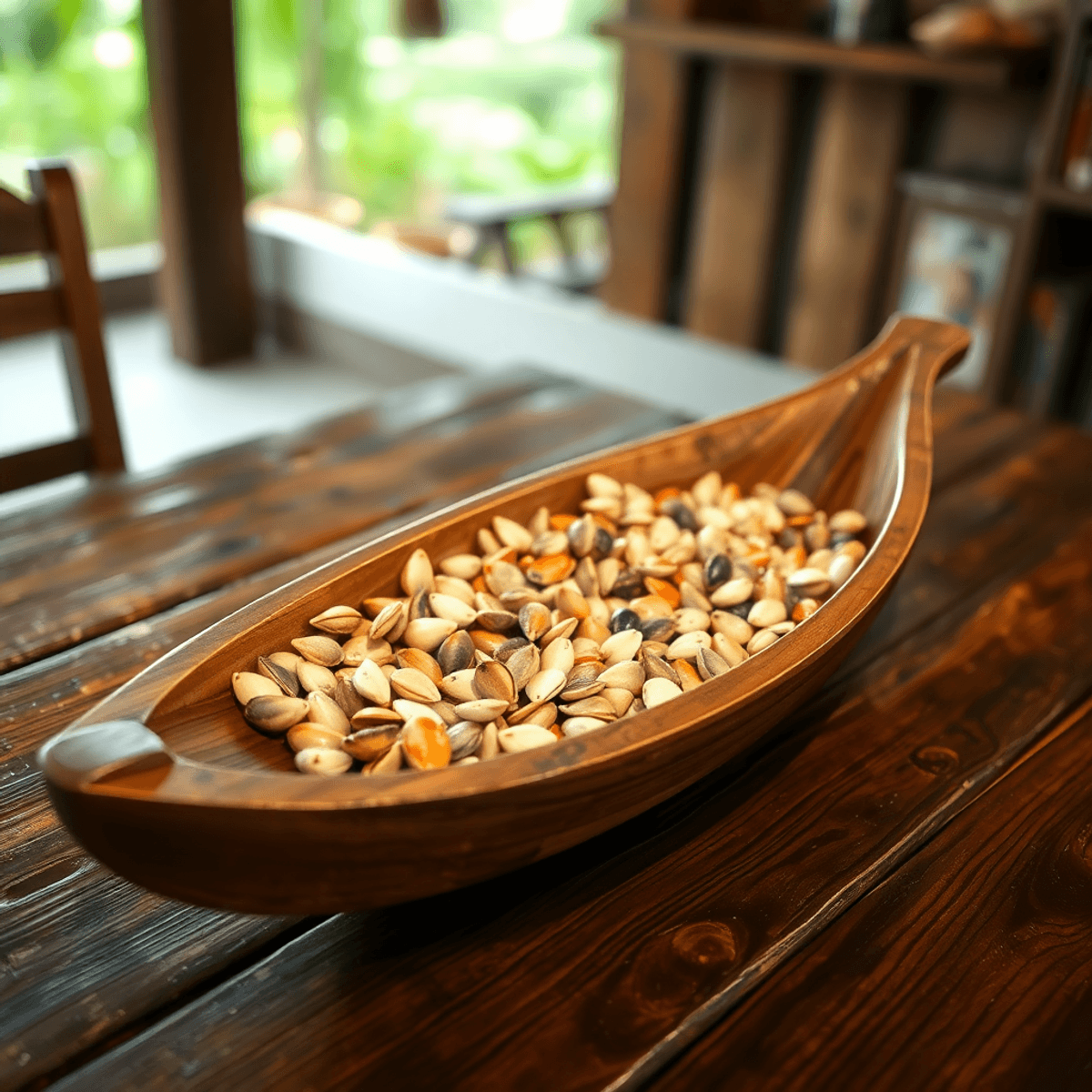
The Sungka game history reflects a rich Filipino tradition that has been passed down through generations. Played on a wooden, boat-shaped board filled with shells or stones, Sungka belongs to the ancient family of mancala games. Its enduring presence in Filipino households is a testament to its cultural and strategic significance.
From busy neighborhoods in Manila to quiet homes in the provinces, Sungka brings together mathematical strategy, cultural heritage, and social bonding. The game requires only a carved wooden board and small shells, but it offers endless opportunities for skill, strategy, and friendly competition.
Sungka is not only beloved in the Philippines but also connects to similar seed-sowing games played around the world. Through tournaments, cultural festivals, and family gatherings, Sungka continues to captivate new generations while preserving timeless Filipino traditions.
In this article, we will explore the Sungka game history, learn about its traditional gameplay and regional variations, and understand why this centuries-old game holds such a special place in Filipino culture. From rural provinces to overseas communities, Sungka continues to bring people together through friendly competition and cultural pride.
The Historical Roots of Sungka
The first recorded mention of Sungka was in José Sanchez’s writings in 1692, where he describes a game called “Kunggit” played by indigenous communities across the Philippines. This name is still used by the Aklanon people, who also have regional variations like Sungca and Sungkaan.
Sungka is part of the ancient family of mancala games. Archaeological evidence has shown that similar board games were played in Egypt and Jordan around 5,000 years ago. These discoveries include carved stone boards with pit patterns that match modern mancala layouts.

The word “mancala” comes from the Arabic word naqala, which means “to move” – a fitting description for these seed-sowing games. Trade routes and cultural exchanges helped spread these games across continents:
- Maritime Silk Road brought variations to Southeast Asian ports
- Arab merchants introduced versions along African coasts
- Colonial networks carried adaptations to the Americas
Each region developed its own unique interpretations of the game but still kept the core elements of strategic pit-to-pit movement. The seafaring culture of the Philippines naturally embraced this portable game, with sailors and traders carrying wooden boards between islands. Local artisans crafted distinctive boat-shaped boards, adding Filipino artistic elements to the ancient game format.
Archaeological finds in Philippine sites have revealed shell pieces and wooden boards dating back to pre-colonial times, suggesting that Sungka has deep roots in local culture even before Spanish documentation. These findings align with broader research into the historical significance of seed-sowing games, highlighting their role in competitive play throughout history.
Understanding How to Play Sungka
Sungka is played on a beautifully carved wooden board shaped like a traditional Filipino boat. The board has two parallel rows of seven small circular hollows called houses, with larger storage pits (head or stores) at each end.
Setting Up the Game
To set up the game, you’ll need:
- A Sungka board
- Fourteen game pieces (traditionally cowrie shells or sigay)
- Two players
Here’s how the setup works:
- Each player sits on opposite sides of the board.
- Each player claims one row of houses and the store to their right as their territory.
- Place seven game pieces in each of the fourteen houses.
Basic Gameplay Rules
Now that the game is set up, let’s go over the basic rules:
- Players take turns selecting a house from their row.
- Moving counterclockwise, drop one shell into each subsequent pit.
- Include your own store but skip your opponent’s.
- If your last shell lands in your store, take another turn.
- When landing in an empty house on your side, capture shells from the opposite house.
Strategy and Planning
A skilled player watches their opponent’s moves carefully while planning several steps ahead. Consider this match scenario: Maria notices her opponent’s houses are running low on shells. She strategically chooses a house containing exactly enough shells to land in her store, earning an extra turn. This critical move allows her to capture a significant number of shells from her opponent’s side, dramatically shifting the game’s momentum.
Ending the Game
The game continues until all houses are empty, with shells accumulated in both stores. The player with the most shells claims victory in this time-honored test of strategy and foresight.
Variations and Regional Differences in Sungka Gameplay
The rich cultural diversity of the Philippines has led to different regional versions of Sungka. In Mindanao, players often use larger boards with deeper pits, accommodating up to 10 shells per house. The Aklanon people maintain their traditional Kunggit version, played with specific capturing rules tied to local harvest customs.
Across Southeast Asia, similar mancala games exhibit interesting regional adaptations:
- Congkak (Malaysia/Singapore/Indonesia)
- Uses 7 holes per row
- Features unique “free turn” rules when landing in the home store
- Played with tamarind seeds or marble counters
- Dakon (Java)
- Incorporates 5-9 holes per row
- Employs special “stealing” mechanics
- Traditional boards carved from teak wood
- Chongka’ (Marianas)
- Utilizes distinctive shell-based scoring
- Features simplified capture rules
- Played during specific cultural celebrations
- Naranj (Maldives)
- Played with 14 houses total
- Uses cowrie shells exclusively
- Includes unique end-game variations
These regional differences reflect local traditions and available materials. Javanese Dakon boards often feature intricate carvings representing local mythology, while Maldivian Naranj emphasizes the spiritual significance of cowrie shells in their maritime culture. The core seed-sowing principle remains constant across variations, creating a shared gaming language throughout the region.
Local communities adapt game rules to match their specific cultural contexts. In some Philippine regions, players must complete specific rituals or observe certain times of day for gameplay, integrating Sungka into broader cultural practices and beliefs.
Cultural Significance of Sungka in Filipino Heritage
Sungka is more than just a board game in Filipino culture. It has become an important educational tool used in schools throughout the Philippines. Teachers use the mathematical patterns found in the game to help children improve their counting skills, think strategically, and solve problems. Research has shown that students with dyscalculia have particularly benefited from this hands-on approach to learning, as they are able to understand mathematical concepts better through the physical act of distributing and counting shells.
Folklore and Superstitions Surrounding Sungka
There are many stories and beliefs associated with this traditional game that have been passed down through generations. For example, many Filipino elders caution against playing Sungka indoors because they believe it could lead to house fires. In the Anay district of Panay, losing a game is taken very seriously – locals believe it may be a sign of impending death or disaster for the player’s family.
Strengthening Family Bonds and Preserving Culture
Sungka also plays a significant role in bringing families together during festive celebrations and gatherings. Grandparents often take the opportunity to teach younger family members how to play the game while sharing anecdotes about their own childhood experiences with it. These cherished moments not only strengthen familial bonds but also help preserve cultural traditions.
Community Connections Through Sungka Tournaments
In many traditional gatherings, you can find Sungka tournaments taking place where:
- Elders demonstrate their expertise
- Children practice patience and observation skills
- Communities foster social connections
- Stories and cultural wisdom are freely exchanged
A Symbol of Filipino Heritage
In numerous Filipino homes, the uniquely shaped boat-like board is proudly displayed as both an item used for playing games and a treasured piece representing their culture. It serves as a reminder of how interactive activities can contribute towards keeping Filipino heritage alive.
Sungka Tournaments and Contemporary Relevance
Sungka is still a popular game in the Philippines today, especially during celebrations. One of the biggest events where Sungka is played competitively is the Kadayawan Sports Festival in Davao City. Every year, talented players come together to show off their skills in this traditional game. These tournaments bring together people of all ages, creating an energetic atmosphere that connects different generations.
International Competitions and Filipino Communities
The influence of Sungka goes beyond the Philippines through international competitions. Filipino communities in Macau organize regular Sungka matches during cultural festivals, while similar events can be found in Taiwan, Germany, and various cities across the United States. These tournaments play a significant role in preserving Filipino identity abroad, allowing diaspora communities to maintain strong cultural ties to their home country.
Sungka’s Impact on Contemporary Art
Sungka has also made its mark on modern art:
- Visual Arts: Filipino artists use Sungka boards in installations that explore themes of heritage.
- Performance: Traditional dance groups incorporate movements inspired by Sungka into their choreography.
- Digital Media: Game developers create virtual versions of Sungka for mobile platforms.
- Crafts: Artisans design contemporary interpretations of Sungka boards using sustainable materials.
Local Initiatives and Education
Local organizations are actively promoting Sungka through programs for youth and cultural exhibitions. The Department of Education includes demonstrations of Sungka in regional competitions, recognizing its importance in preserving Filipino cultural heritage while engaging new generations in meaningful play.

Sungka: A Part of the Global Family of Seed-Sowing Games
Sungka is a great example of how people around the world love strategic games, no matter where they’re from. This Filipino game is part of the ancient mancala family – a wide range of seed-sowing games played in Africa, Asia, and the Caribbean.
Similarities Between Mancala Games
The main rules and gameplay of these games have some interesting similarities:
- Counter Distribution: In Oware (Africa) and Hawalis (Middle East), players move game pieces around the board in a similar sowing pattern.
- Strategic Captures: The capture rules in Gebeta (Ethiopia) and Congkak (Malaysia) are reminiscent of Sungka’s mechanics.
- Board Design: Various forms of mancala games feature two-row layouts with end stores, made from different materials like carved wood or holes in the ground.
Shared Elements Across Cultures
Game historians have studied these shared features and found that they go beyond geographical boundaries. Dr. Irving Finkel from the British Museum explains that mancala-type games are evidence of ancient connections between cultures. For instance, the influence of Mancala in Roman Asia Minor showcases its historical significance and widespread reach.
Why Mancala Games Are Popular Worldwide
The widespread popularity of these games can be attributed to several factors:
- They have mathematical foundations that appeal to logical thinkers.
- They require social interaction, making them ideal for gatherings and family bonding.
- People of all ages can enjoy them, as the rules are simple yet allow for deep strategic thinking.
Sungka’s Role as a Cultural Bridge
Sungka’s place in this global family of games shows how they can bring different cultures together. Each region puts its own unique spin on the game while still keeping the main ideas intact. This is similar to how mancala games continue to be cherished pastimes in other societies.
These connections highlight human creativity in designing fun social activities through play styles that may be different but still share common elements. Archaeological findings indicate that these games have played a role in cross-cultural interactions for thousands of years, with ancient boards discovered along historical trade routes connecting Egypt to Southeast Asia.
Interestingly, just like Victorian board games influenced social leisure activities, mass production methods, and modern gaming trends, the development of board games such as Sungka also reflects larger societal changes.
Educational Value and Cognitive Benefits of Playing Sungka
Research shows that Sungka is a powerful educational tool, providing significant cognitive benefits for players of all ages. Studies from the Philippine Journal of Education highlight specific mental skills improved through regular gameplay:
- Mathematical Processing: Players develop quick mental arithmetic abilities through continuous counting and strategic distribution of game pieces
- Spatial Reasoning: The circular movement pattern of shells strengthens spatial awareness and pattern recognition
- Working Memory: Tracking multiple potential moves and their outcomes builds memory capacity
- Strategic Planning: Players learn to anticipate consequences several moves ahead
Filipino educators have integrated Sungka into mathematics curricula with remarkable results. At San Pedro Elementary School in Davao, students using Sungka-based learning showed a 27% improvement in basic arithmetic skills compared to traditional teaching methods.
The game proves particularly valuable for children with dyscalculia. Dr. Maria Santos, a special education specialist at the University of the Philippines, documents how Sungka’s tactile nature and structured counting patterns help students overcome mathematical learning challenges:
“The physical act of moving shells combined with the game’s predictable patterns creates a safe, engaging environment for children to practice numerical concepts without anxiety.”
Schools across the Philippines now incorporate Sungka into their Traditional Games for Learning programs, recognizing its effectiveness in developing:
- Critical thinking skills
- Problem-solving abilities
- Social interaction competencies
- Cultural awareness
Recent neurological studies suggest that the complex decision-making processes in Sungka activate multiple brain regions simultaneously, fostering neural pathway development in young players.
Preserving a Cultural Legacy Through Play
The Sungka game history is a powerful example of how traditional Filipino games can endure and remain relevant. Sungka connects past and present, teaching strategy while fostering intergenerational bonding. Its continued popularity around the world reflects the strength of cultural heritage and its ability to transcend borders.
The game’s lasting appeal lies in its ability to:
- Build cognitive skills through engaging gameplay
- Strengthen family bonds during shared gaming sessions
- Preserve Filipino cultural identity
- Connect players to a rich historical tradition
As we move deeper into a digital age, the Sungka game history reminds us of the timeless value of traditional board games. Each shell placed on its carved wooden surface tells a story—of heritage, family, and shared experience—that continues to enrich the lives of players both young and old.
This sentiment is echoed in the exploration of traditional board games from diverse cultures, revealing their significance and the rich traditions behind them. Furthermore, understanding the forgotten predecessors of modern board game classics can provide insight into how these games have shaped our current gaming landscape.
Moreover, delving into the golden age of board games reveals how this era influenced gaming trends, with mass-market classics and innovations that still resonate today.
Lastly, exploring the rich history of ancient and medieval board games from various cultures can further enrich our understanding and appreciation for these timeless pastimes.
Ready to explore more cultural board games? Visit your local Filipino cultural center or connect with community groups to discover the joy of traditional gaming firsthand.