The Mancala influence in games is a fascinating example of how ancient mechanics continue to shape modern design. Mancala, a game that has existed for over 1,300 years, offers simple yet strategic gameplay that remains relevant today. Its legacy lives on through a wide range of contemporary board games that adapt and expand on its core ideas.
The basic idea of Mancala is to distribute stones or seeds across a series of pits, requiring players to carefully plan their moves and manage their resources. This ancient system of moving and controlling pieces has influenced many contemporary games, from complex strategy titles to casual family entertainment.
Mancala’s influence on modern resource games goes beyond its traditional wooden boards. Today’s designers have taken this classic seed-sowing mechanic and put their own spin on it:
- Strategic action selection in games like Trajan
- Worker placement systems in Five Tribes
- Resource management mechanics in Crusaders: Thy Will Be Done
Modern interpretations of the seed-sowing mechanic highlight the enduring Mancala influence in games. Designers have taken this ancient concept and transformed it into innovative gameplay systems, proving that timeless ideas can evolve into new forms. The brilliance of Mancala lies in delivering deep strategic decisions through minimal rules—a design principle that resonates strongly with today’s creators and players alike.
Mancala: An Ancient Game with Enduring Influence
Mancala is an ancient game that has had a lasting impact on the world of board games. Its origins can be traced back to ancient Egypt, where game boards were carved into temple roofs around 1400 BCE. The name “Mancala” comes from the Arabic word naqala, which means “to move,” reflecting the game’s main action of moving pieces across the board.
Mancala’s Journey Through Trade Routes
Mancala spread to various cultures through trade routes, where it was embraced and adapted in different regions:
- Africa: In Ghana, it is known as Oware, while in East Africa, it is called Bao.
- Asia: The game is referred to as Congkak in Malaysia and Pallanguzhi in India.
- Caribbean: Descendants of African slaves play a version called Warri.

The Structure of Traditional Mancala
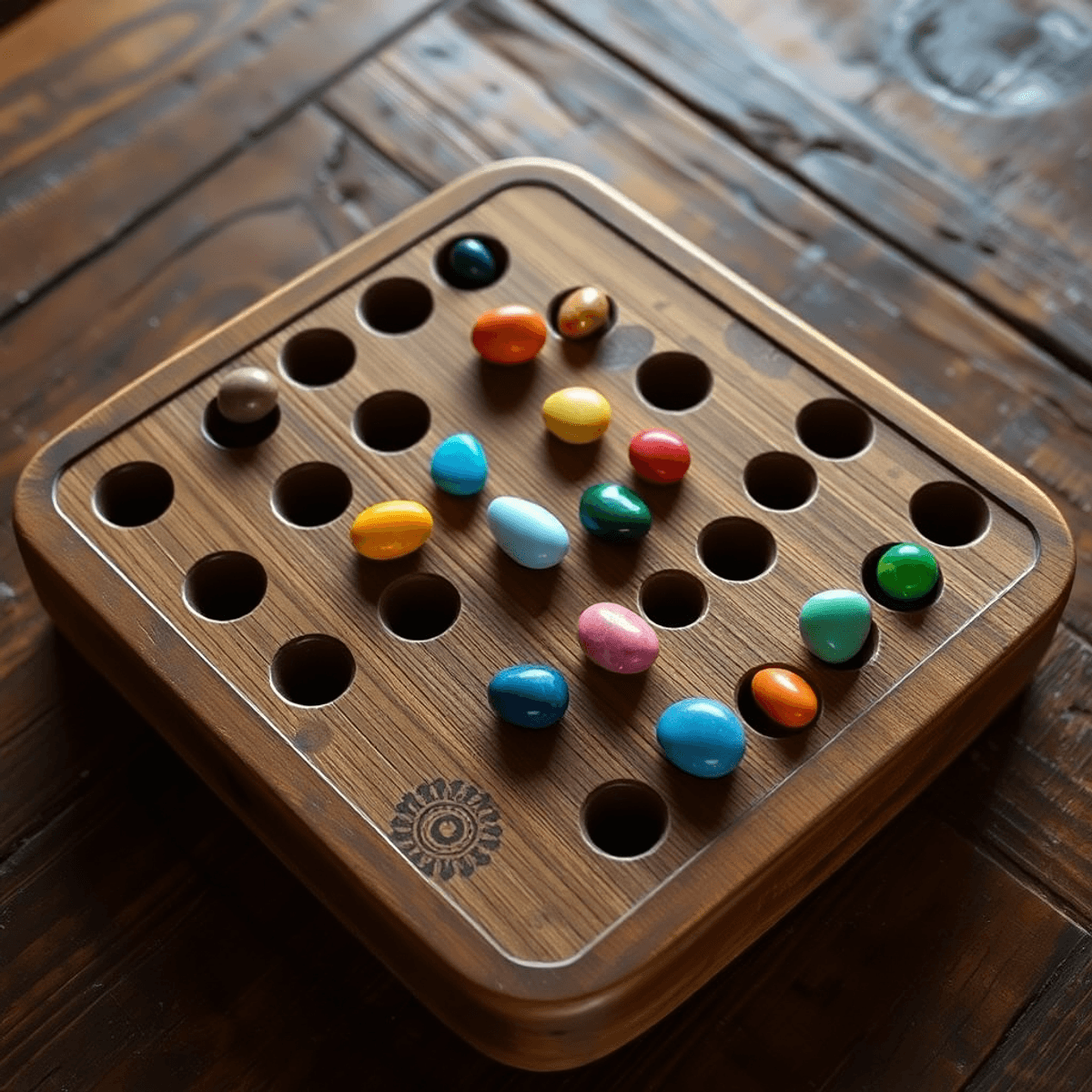
The traditional Mancala board consists of:
- Two rows of pits arranged in parallel
- Larger storage pits located at each end
- Seeds, stones, or shells used as playing pieces
How Mancala is Played
Players take turns by choosing a pit and distributing its contents in a counterclockwise manner, placing one piece in each subsequent pit. This simple yet strategic method of “sowing” creates complex decision-making scenarios, as players must think about:
- The number of pieces in each pit
- How they distribute their pieces
- Opportunities to capture opponent’s pieces
- Positioning for the end game
The Global Impact of Mancala
The game’s mathematical complexity and cultural importance have led to numerous adaptations around the world. From Ethiopian shepherds playing with holes dug in the ground to intricate wooden boards found in Southeast Asian palaces, Mancala’s ability to adapt has allowed it to endure for thousands of years.
This article delves into how Mancala’s mechanics have influenced modern board game design, particularly in areas such as resource management and strategic planning in contemporary tabletop games.
The Evolution of Board Game Design Through Mancala Inspiration
The ancient seed-sowing mechanics of Mancala have sparked a creative revolution in modern board game design. Game designers have reimagined these time-tested principles, transforming them into sophisticated resource management and action selection systems that challenge players in new ways.
Trajan: Utilizing Mancala Mechanics for Strategic Action Selection
Stefan Feld’s Trajan stands as a masterful example of Mancala-inspired game design. Set in ancient Rome, this strategic masterpiece incorporates a modified Mancala system called the “Trajan Wheel” – six action bowls arranged in a circle, each corresponding to different activities players can perform.
How the Trajan Wheel Works
The Trajan Wheel operates through these key mechanics:
- Players distribute tokens between bowls, following Mancala’s signature one-by-one placement
- The final bowl where tokens land determines the available action
- Specific token combinations trigger bonus tiles and additional benefits
- Time-sensitive scoring opportunities create urgency in decision-making
Layers of Strategy in Trajan
This innovative adaptation creates layers of strategic depth:
- Action Planning: Players must carefully calculate token distribution to access desired actions
- Timing Management: The sequence of moves affects both immediate actions and future possibilities
- Resource Optimization: Efficient token movement maximizes action potential
- Strategic Flexibility: Multiple paths to victory emerge through varied action combinations
Preserving Mancala’s Essence while Adding Complexity
The genius of Trajan’s design lies in how it preserves Mancala’s core seed-sowing concept while adding complexity through:
- Multiple interconnected game systems
- Long-term strategic planning requirements
- Competitive scoring opportunities
- Dynamic player interaction
This reimagining demonstrates how ancient game mechanics can evolve into sophisticated modern systems. The Mancala influence creates a puzzle-like decision space where every token movement carries strategic weight, while maintaining the accessibility of the original seed-sowing concept.
The success of Trajan has inspired other designers to explore similar mechanical adaptations, leading to a new generation of games that blend traditional concepts with contemporary design principles. These innovations showcase the enduring relevance of Mancala’s foundational mechanics in creating engaging strategic experiences.
Five Tribes: Expanding on the Seed-Sowing Concept with Varied Gameplay
Bruno Cathala’s Five Tribes reimagines Mancala’s seed-sowing mechanic through a vibrant marketplace setting in ancient Arabia. The game transforms the traditional circular board into a dynamic 5×6 grid filled with colorful meeples, creating branching paths for strategic movement.
Players select and lift all meeples from any tile, distributing them one-by-one across adjacent spaces. This distribution system adds depth through:
- Multiple Meeple Colors – Each color triggers unique actions
- Variable Tile Effects – Landing spots influence available strategies
- Bidding for Turn Order – Players compete for optimal starting positions
The game’s innovation lies in its reverse-Mancala approach – instead of collecting pieces, players strategically empty spaces to claim tiles and activate powerful combinations. A player might chain together actions by:
- Dropping the last yellow meeple to activate a merchant
- Gaining resource cards
- Claiming valuable tiles
- Triggering special abilities
This adaptation creates intricate decision trees where the order of meeple placement directly impacts scoring opportunities. The marketplace setting enhances resource management through palm trees, palaces, and djinn cards – elements that blend seamlessly with the core distribution mechanic.
Five Tribes demonstrates how ancient game mechanics can evolve into rich, multi-layered experiences while maintaining the strategic essence of resource distribution that made Mancala a timeless classic.
Crusaders: Thy Will Be Done and Finca: Innovations in Resource Management
Crusaders: Thy Will Be Done brings a fresh perspective to resource management through its innovative rondel system. Players manipulate tokens on a wheel-shaped board, directly inspired by Mancala’s seed-sowing mechanic. The game transforms this ancient concept into a dynamic action-selection method where moving pieces clockwise strengthens specific actions:
- Building structures
- Training troops
- Moving across territories
- Engaging in combat
The brilliance lies in how each action grows stronger based on the number of tokens accumulated in its corresponding sector, creating a strategic depth that echoes Mancala’s careful resource distribution.
Finca takes a different approach by applying Mancala principles to agricultural production. The game features a windmill-shaped rondel where players collect and distribute worker pieces to harvest fruits. Each movement determines:
- The type of fruit collected
- Quantity of resources gained
- Special bonus actions triggered
The distribution mechanism creates interesting decision points as players must balance immediate gains against setting up future turns. The game’s tight economy forces players to plan their token movements carefully, making each seed-sowing decision crucial for success.
Both games demonstrate how Mancala’s ancient wisdom continues to inspire innovative resource management systems. They preserve the core satisfaction of strategic distribution while adding unique thematic elements and mechanical twists that appeal to modern gaming sensibilities.

Theseus: The Dark Orbit – Using Mancala Logic for Movement Strategies
Theseus: The Dark Orbit takes the seed-sowing concept of Mancala and puts it in a sci-fi setting, creating a one-of-a-kind movement system within the modular sections of a space station. Players move their units through four different parts of the station, each with three spaces that follow Mancala-inspired distribution patterns.
How Mancala Logic Works in Theseus
The game’s innovative approach changes traditional movement from one pit to another into tactical positioning choices:
- Players choose a section where their units are located
- Movement follows a clockwise pattern similar to how seeds are distributed in Mancala
- Units can be placed in multiple spaces, creating strategic opportunities for positioning
- The number of units determines how far they can move and what actions they can take
Tactical Decisions Players Need to Make
This adaptation creates intense tactical decisions as players must think about:
- How to distribute their units for optimal coverage
- How to position their units defensively against opponent movements
- How to access important resource spaces
- When to use special abilities and when to engage in combat
The Pressure of Limited Space
The game’s confined space station setting adds pressure to each movement decision, as poor unit distribution can leave sections vulnerable to enemy control. Players must find a balance between being aggressive with their positioning and being defensive with their arrangements, making each turn a careful calculation of risk and reward.
Theseus shows how the ancient movement logic of Mancala can be reimagined into a modern sci-fi combat system while still keeping the strategic depth of resource distribution that made the original game a timeless classic.
Embracing the Legacy of Mancala in Modern Board Game Experiences
The timeless appeal of Mancala’s seed-sowing mechanic lies in its elegant simplicity paired with deep strategic potential. This core mechanism has proven remarkably adaptable, spawning countless variations in modern game design that enhance player engagement and decision-making complexity.
Creative Integration of Mancala’s Strategic Elements by Modern Board Game Designers
Modern board game designers have discovered creative ways to integrate Mancala’s strategic elements:
- Resource Distribution Systems – The rhythmic flow of distributing pieces creates natural economic cycles within games
- Action Selection Mechanics – Strategic placement and movement of pieces determines available choices
- Area Control Dynamics – Seed-sowing patterns influence territorial dominance
- Engine Building Elements – Sequential distribution builds momentum and combinations
Beyond Mechanics: Drawing Inspiration from Mancala’s Fundamental Principles
The influence of mancala strategy extends beyond mechanical implementation. Game designers draw inspiration from its fundamental principles:
- Strategic depth emerging from simple rules
- Multiple layers of decision-making
- Natural player interaction through shared spaces
- Built-in catch-up mechanisms through resource redistribution
Ancient Game Influences on Innovative Gameplay Experiences
These ancient game influences, including the rich history of ancient and medieval board games, continue to shape innovative gameplay experiences. The adaptability of Mancala’s core concepts allows designers to create fresh experiences while maintaining familiar strategic elements that have captivated players for generations. This design heritage enriches the modern gaming landscape with mechanics that feel both novel and instinctively natural to grasp.
The Evolution of Board Games: Shaping Modern Classics
Additionally, the evolution of board games over time, such as during the Victorian Era or the Golden Age from the 1950s to 1970s, has also played a significant role in shaping modern classics. These periods not only marked a boom in mass-market board games but also introduced innovations that influenced gaming trends significantly.
Uncovering Forgotten Predecessors: Their Impact on Modern Board Game Classics
Moreover, exploring the forgotten predecessors that paved the way for these modern classics reveals how they have influenced mechanics, themes, and player experiences today.
Conclusion
The Mancala influence in games is a testament to the power of elegant design. What began as a simple way to pass the time in ancient marketplaces has become a foundational mechanic in modern board game strategy. Its seed-sowing system has inspired countless titles, evolving into complex resource-distribution frameworks that continue to engage players across generations.
This simple yet profound mechanic has transformed into complex strategic elements in games like Trajan and Five Tribes, showing how classic game mechanics can adapt and endure over time. These modern interpretations keep the core essence of Mancala while bringing in new perspectives and innovative gameplay experiences.
Interested in exploring the Mancala influence in games firsthand? Dive into titles like Trajan or Five Tribes, where ancient mechanics meet modern innovation. These games prove that thoughtful design from centuries ago still has the power to challenge, entertain, and inspire today’s tabletop experiences.
Moreover, Mancala is just one example of how traditional games can shape modern gaming experiences. If you’re interested in exploring more about traditional board games from diverse cultures, you’ll find a wealth of knowledge about their significance and the rich traditions behind them. The next time you sit down for a gaming session, you’ll recognize the subtle influences of this timeless classic shaping your strategic choices.