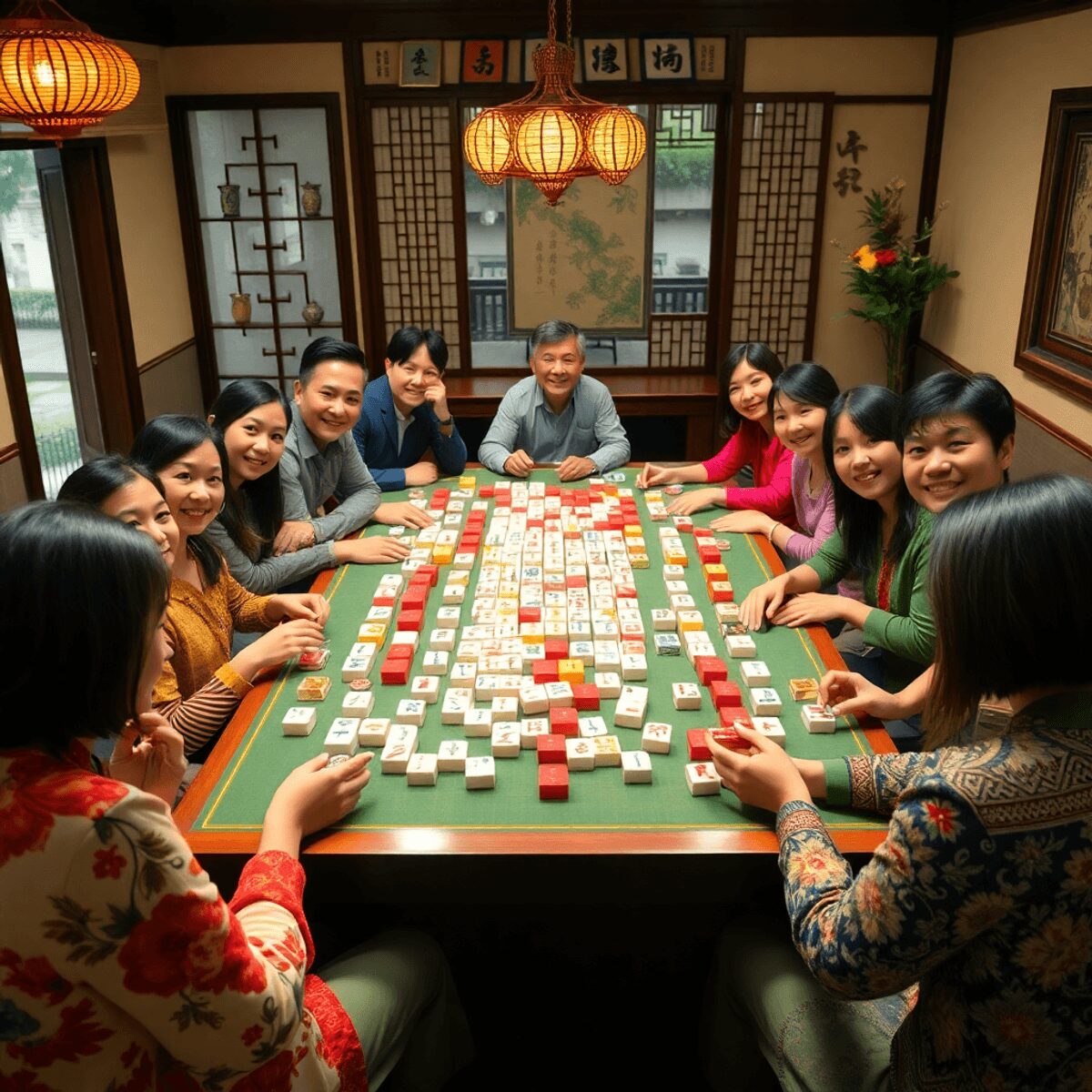
Mahjong is a tile-based game that has brought people together across generations and cultures. The story of mahjong history reveals a fascinating evolution—from Qing Dynasty origins to global popularity—while the game’s essence has remained rooted in strategy, skill, and social interaction.
The Origins and Journey of Mahjong
Mahjong originated in China during the mid-1800s. What started as a game played by families has now become popular all over the world. The sound of tiles clicking and the lively conversations around Mahjong tables have become synonymous with gatherings in Asia and beyond.

Cultural Significance of Mahjong
This game holds a special place in Chinese culture, serving as a means of social bonding and entertainment. It has deep roots in Chinese communities, both in China and abroad.
In this article, we will explore various aspects of Mahjong:
- The interesting history of how it spread from China to other parts of the world
- Its cultural importance, particularly in Chinese and Chinese-American communities
- Basic rules and gameplay for those interested in learning
- Different regional variations found in China, Japan, Singapore, and America
- Distinct features of various Mahjong styles
From traditional Chinese settings to contemporary American homes, Mahjong has influenced social interactions and cultural exchanges. Its ability to adapt while still retaining its core essence offers valuable insights into understanding cultural evolution and community building across different societies.
Mahjong’s Connection to Other Games
Mahjong is part of a larger cultural exploration that includes other ancient and medieval board games. These games have played significant roles in shaping history, much like Mahjong has done.
Additionally, the development of games like Mahjong often reflects the journeys of renowned board game creators whose innovative designs have made lasting impacts on the gaming industry.
As we look ahead, it will be fascinating to see how games such as Mahjong continue to evolve in terms of gameplay and cultural significance.
1. The Fascinating History and Origins of Mahjong
Mahjong originated in China during the Qing Dynasty in the mid-1800s. It was created by the people in the provinces of Zhejiang, Jiangsu, and Anhui. The game combines ancient Chinese traditions with new and innovative gameplay mechanics.
Ancestral Roots of Mahjong
Mahjong has its roots in earlier Chinese card games that are now mostly forgotten but played a significant role in shaping modern board games. Some of these games include:
- Yezi Pai – A card game using paper cards adorned with money symbols
- Ma Diao – A trick-taking game featuring suits of strings, myriads, and tens
- Pai Gow – A domino-based gambling game still popular today
Evolution from Cards to Tiles
The transition from using paper cards to tiles happened gradually. In the early days, Mahjong sets were made with hand-carved bamboo or ivory pieces. These early sets were often precious and included intricate designs and symbols from Chinese culture.
The Meaning Behind “Mahjong”
The name “Mahjong” itself has different theories about its origin. One popular theory suggests it comes from “má què” (麻雀), meaning sparrow, which refers to the sound of tiles clicking together resembling sparrow chatter. Another theory links it to the hemp-patterned backs of early playing cards.
Mahjong’s Journey to International Fame
In the 1920s, Mahjong caught the attention of foreign visitors to China, leading to its spread around the world. Joseph Park Babcock, an American businessman, played a key role in this by standardizing and simplifying the rules for Western audiences. He published “Rules of Mah-Jongg” in 1920, which helped create the first Mahjong boom in America.
Rapid Spread Across Regions
The game quickly spread to various regions:
- 1924: Reached Japan, evolving into Riichi Mahjong
- 1920s-30s: Gained popularity in Britain and Europe
- 1937: Formation of the National Mah Jongg League in America
- 1960s: Development of unique Singaporean variants
Each region adapted Mahjong according to their local preferences while still keeping its core elements intact – strategy and social interaction.
Cultural Adaptability of Mahjong
The ability of Mahjong to transcend cultural boundaries while still retaining its Chinese essence is a testament to its universal appeal and adaptability.
This phenomenon can be compared to classic board games which have evolved over time yet continue influencing society today.
Furthermore, during the mid-20th century there was a golden age for board games when many classic games were mass-marketed and innovated upon. This period further shaped modern gaming trends.
2. Understanding the Cultural Significance of Mahjong
Mahjong is more than just a game; it’s an integral part of Chinese culture and social life. It’s deeply embedded in everyday activities and family customs, playing a crucial role in bringing families together and maintaining social relationships. During festive occasions, the distinct sound of Mahjong tiles being shuffled fills Chinese homes as family members from different generations gather to play.
The Broader Impact of Mahjong
The influence of Mahjong goes beyond its entertainment value. It aligns with the wider category of traditional board games that showcase unique customs across the globe:
- Family Values: Parents and grandparents use Mahjong to teach younger generations about strategy, patience, and mathematical thinking
- Social Etiquette: The game instills important cultural values like respect for elders and maintaining harmony during competitive play
- Traditional Wisdom: Many Chinese proverbs and life lessons are passed down through Mahjong gameplay
Mahjong’s Role in Chinese American Communities
For Chinese Americans, Mahjong became a significant means of fostering community connections during the waves of immigration in the 19th and 20th centuries. In Chinatowns throughout America, Mahjong parlors served as safe havens where immigrants could:
- Maintain ties to their cultural roots
- Establish support systems in their new country
- Exchange information and opportunities within the community
The Influence of Mahjong on American Culture
In the 1920s, Mahjong made its way into American pop culture, specifically among Jewish American women. These players put their own spin on the game by creating standardized rules and introducing annual playing cards issued by the National Mah Jongg League. This adaptation showcases Mahjong’s remarkable ability to bridge cultural divides while still appealing to its core audience.
Today, Mahjong has transformed from being seen as an exotic curiosity to becoming a recognized symbol of Asian American heritage. Modern-day Mahjong clubs and social groups actively promote cross-cultural understanding, demonstrating how this game continues to have the power to bring together diverse communities through shared enjoyment of strategic play.
3. How to Play Mahjong: A Beginner’s Guide
Learning Mahjong starts with understanding its essential components and basic gameplay mechanics. Let’s break down the fundamentals that every new player needs to know.
The Tile Set
A standard Mahjong set contains 144 tiles divided into these categories:
- Suited Tiles (108 pieces)
- Bamboo (36 tiles) – Numbered 1-9, four of each
- Characters (36 tiles) – Chinese numbers 1-9, four of each
- Dots (36 tiles) – Circles numbered 1-9, four of each
- Honor Tiles (28 pieces)
- Winds (16 tiles) – East, South, West, North
- Dragons (12 tiles) – Red, Green, White
- Bonus Tiles (8 pieces)
- Flowers (4 tiles)
- Seasons (4 tiles)

Basic Gameplay Mechanics
The game begins with players building a wall of tiles and taking turns drawing and discarding them. Your goal is to create a winning hand consisting of:
- 4 melds (sets of tiles)
- 1 pair
Valid Melds Include:
- Pung – Three identical tiles
- Kong – Four identical tiles
- Chow – Three consecutive numbers in the same suit
Turn Structure
Here’s how a typical turn unfolds in Mahjong:
- Draw a tile from the wall
- Evaluate your hand
- Discard an unwanted tile
- Call “Mahjong” when you complete a winning hand
Players can also claim discarded tiles from other players to complete their melds, adding an interactive element to the gameplay. The strategic depth comes from deciding which tiles to keep, which to discard, and when to reveal your intentions by claiming tiles.
4. The Evolution of Mahjong Across Different Countries
Mahjong’s journey across borders has spawned fascinating regional variations, each reflecting local cultural preferences and gaming traditions. Let’s explore these distinct adaptations:
1. Chinese Variants
- Hong Kong Mahjong: Features a unique scoring system with minimum points requirement
- Taiwanese Mahjong: Includes special hands like “Thirteen Orphans” and “All Honors”
- Mainland Chinese: Emphasizes simplified scoring and faster gameplay
2. Japanese Riichi Mahjong
- Introduces the concept of riichi – declaring readiness to win
- Removes flower and season tiles
- Adds red dora tiles for bonus points
- Implements strict defensive strategies and complex scoring patterns

3. American Mahjong’s Unique Features
- Annual card of standardized winning hands from National Mah Jongg League
- Addition of joker tiles (8 in total)
- Charleston passing ritual at game start
- Distinctive betting practices and tournament structures
4. Singaporean Mahjong
- Incorporates elements from both Hong Kong and Malaysian styles
- Higher emphasis on gambling aspects
- Special “animal tiles” used in some variations
- Simplified scoring system compared to Chinese versions
The game’s adaptability shines through these regional differences. American Mahjong stands out with its structured approach and yearly changing patterns, while Japanese Riichi emphasizes competitive play and strategic depth. Chinese variants maintain traditional elements while accommodating local preferences, and Singaporean Mahjong blends various influences into its own unique style.
These variations showcase Mahjong’s remarkable ability to adapt while maintaining its core appeal. Each version adds new layers to the game’s rich tapestry, creating distinct experiences that resonate with local players.
5. Embracing Diversity: Comparing Singaporean and Japanese Versions with American Mahjong
Singaporean Mahjong stands out with its unique scoring system that emphasizes speed and aggressive gameplay. Players can win with smaller hands, making games faster and more dynamic. The scoring system rewards:
- “Pong” (three of a kind) – 1 point
- “Kong” (four of a kind) – 2 points
- “Pure Hand” (same suit) – 3 points
Japanese Mahjong, known as Riichi Mahjong, features a complex scoring system based on yaku (winning patterns). Players must declare “riichi” when one tile away from winning, adding an element of psychological warfare. Key features include:
- Minimum point requirement to win
- Dora tiles that increase hand value
- No flower or season tiles
- Strict penalties for rule violations
American Mahjong differs dramatically through its:
- Annual card of standard hands
- Use of joker tiles
- Charleston passing ritual
- Fixed scoring based on hand difficulty
These regional adaptations showcase how Mahjong has evolved to match local gaming preferences while maintaining its core strategic elements. The Japanese version emphasizes skill and calculation, Singaporean rules favor quick thinking and opportunistic play, while American Mahjong focuses on pattern recognition and social interaction.
Conclusion
Mahjong is a powerful game that brings people together, transcending cultural barriers and creating meaningful connections. It originated in 19th century China and has now become a beloved pastime enjoyed by many across different continents.
The game’s ability to adapt while still staying true to its core essence is a testament to its lasting appeal. Each region has its own unique version of Mahjong – whether it’s Chinese, American, Japanese, or Singaporean – which adds another layer to the game’s rich history. These adaptations beautifully blend tradition with innovation, preserving cultural heritage while also embracing change.
Even today, Mahjong continues to unite people from various backgrounds and generations. Its strategic depth, social nature, and cultural significance make it more than just a game – it’s a living bridge connecting the past with the present, East with West, tradition with evolution. The sound of tiles clicking can be heard in homes all around the world, as new stories are created and bonds between players are strengthened – just like it has been for over 150 years.