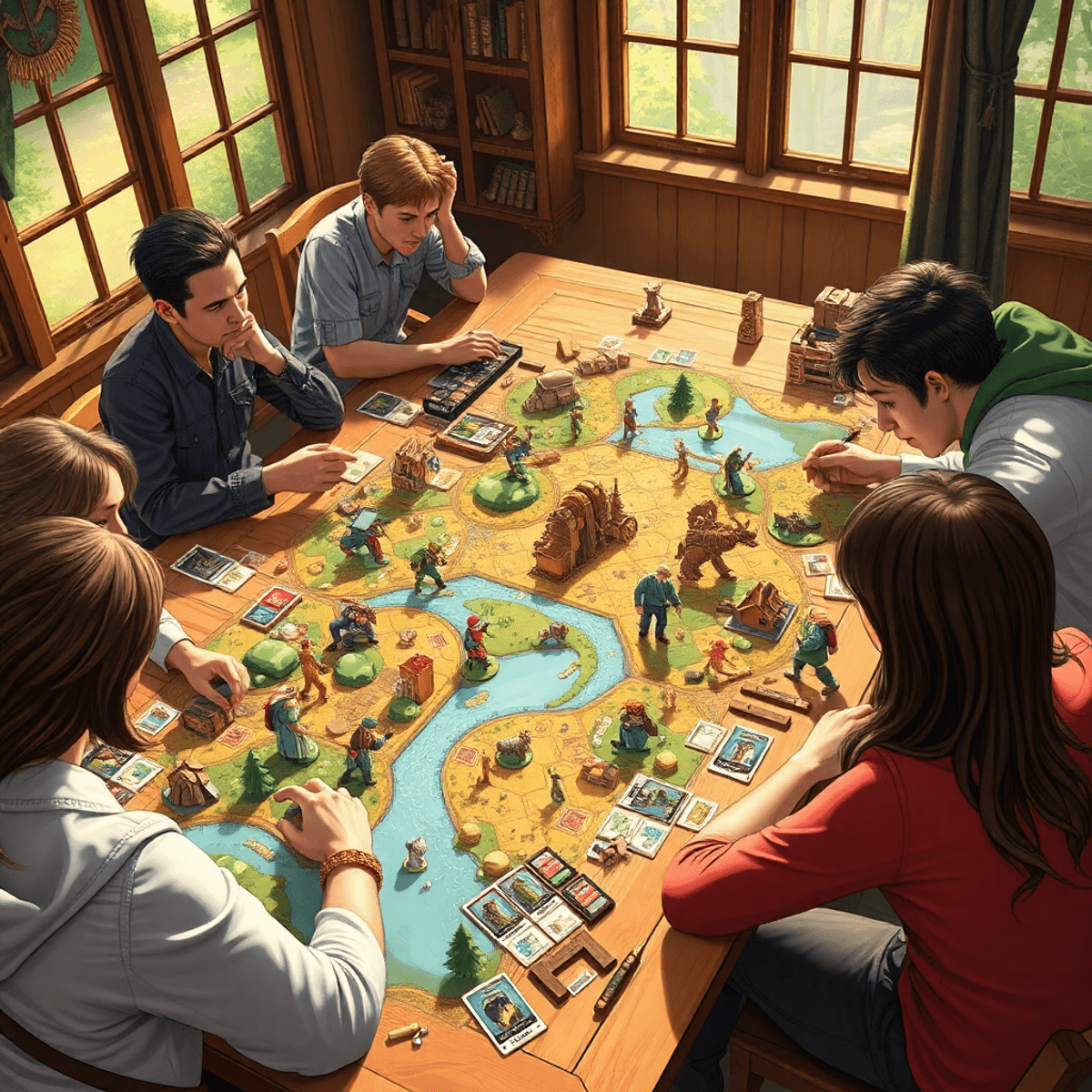
The Tzolkin board game brought a groundbreaking twist to a beloved genre. Worker placement games have long been a cornerstone of modern board gaming, captivating players with strategic depth and resource management challenges. These Eurogames invite players to position their workers across action spaces, making calculated decisions that define their path to victory—but Tzolk’in dared to make the entire game board dynamic.
Enter Tzolk’in: The Mayan Calendar – a groundbreaking design that transformed the worker placement landscape in 2012. At its core lies an ingenious system of interconnected gears that tick away like the ancient Mayan calendar, creating a captivating interplay of timing and strategy.
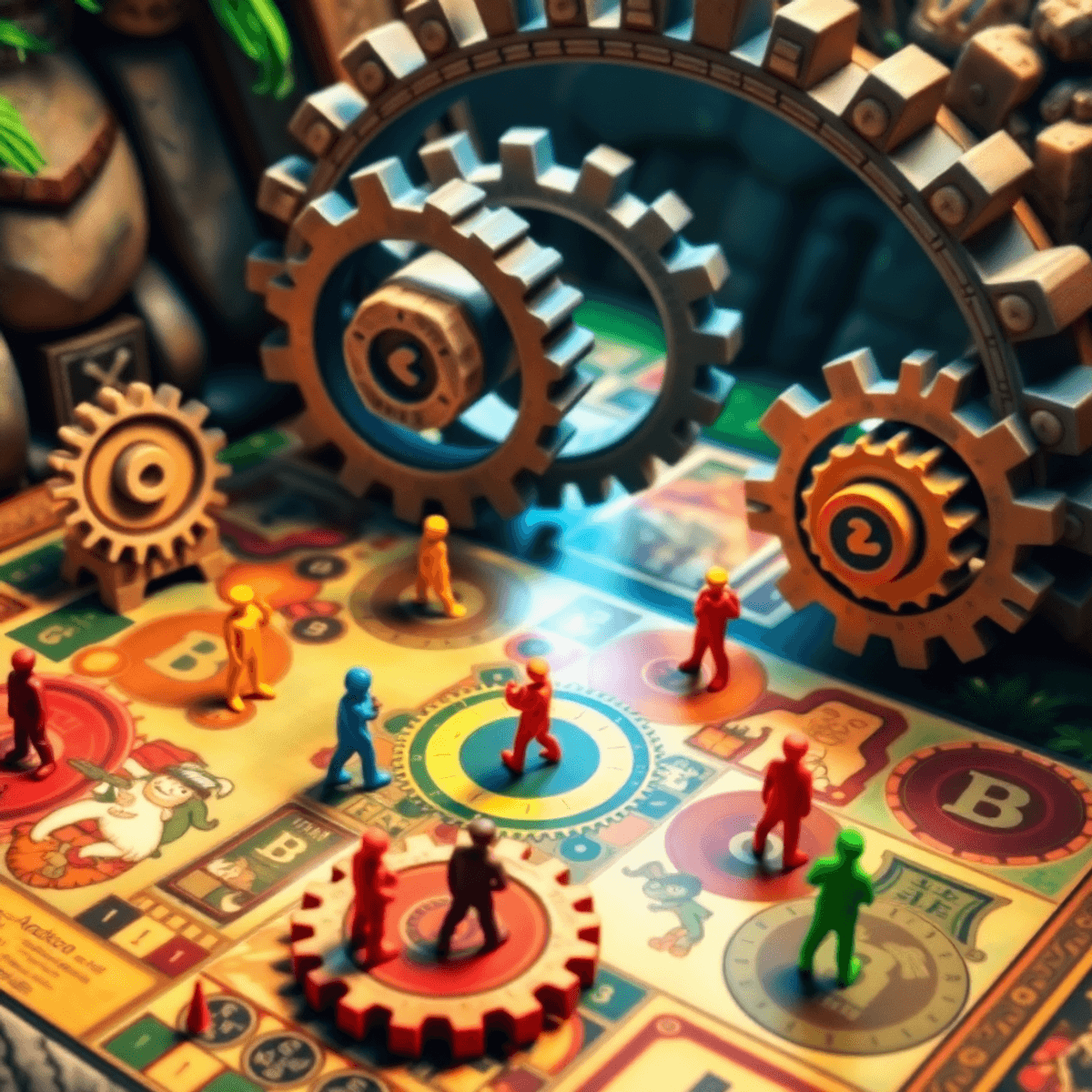
What happens when you add rotating gears to worker placement? The Tzolkin board game answers this question with a mechanical marvel that reimagines traditional gameplay. Each turn of the central gear advances workers toward increasingly powerful actions, forcing players to weigh short-term needs against long-term rewards. This brilliant timing-based mechanic has sparked discussions among game designers: How can physical components create temporal tension? What makes delayed gratification so satisfying in strategy games?
The game’s immersive Mayan theme elevates the experience beyond mere mechanics. Players don’t just place workers – they send their people to build temples, harvest crops, and earn the favor of ancient gods. The rotating gears become a tangible representation of time itself, connecting players to the cyclical nature of the Mayan calendar.
Tzolk’in didn’t just introduce a new mechanism to worker placement games – it redefined what’s possible in strategic board game design.
The Evolution of Worker Placement Games Before Tzolk’in
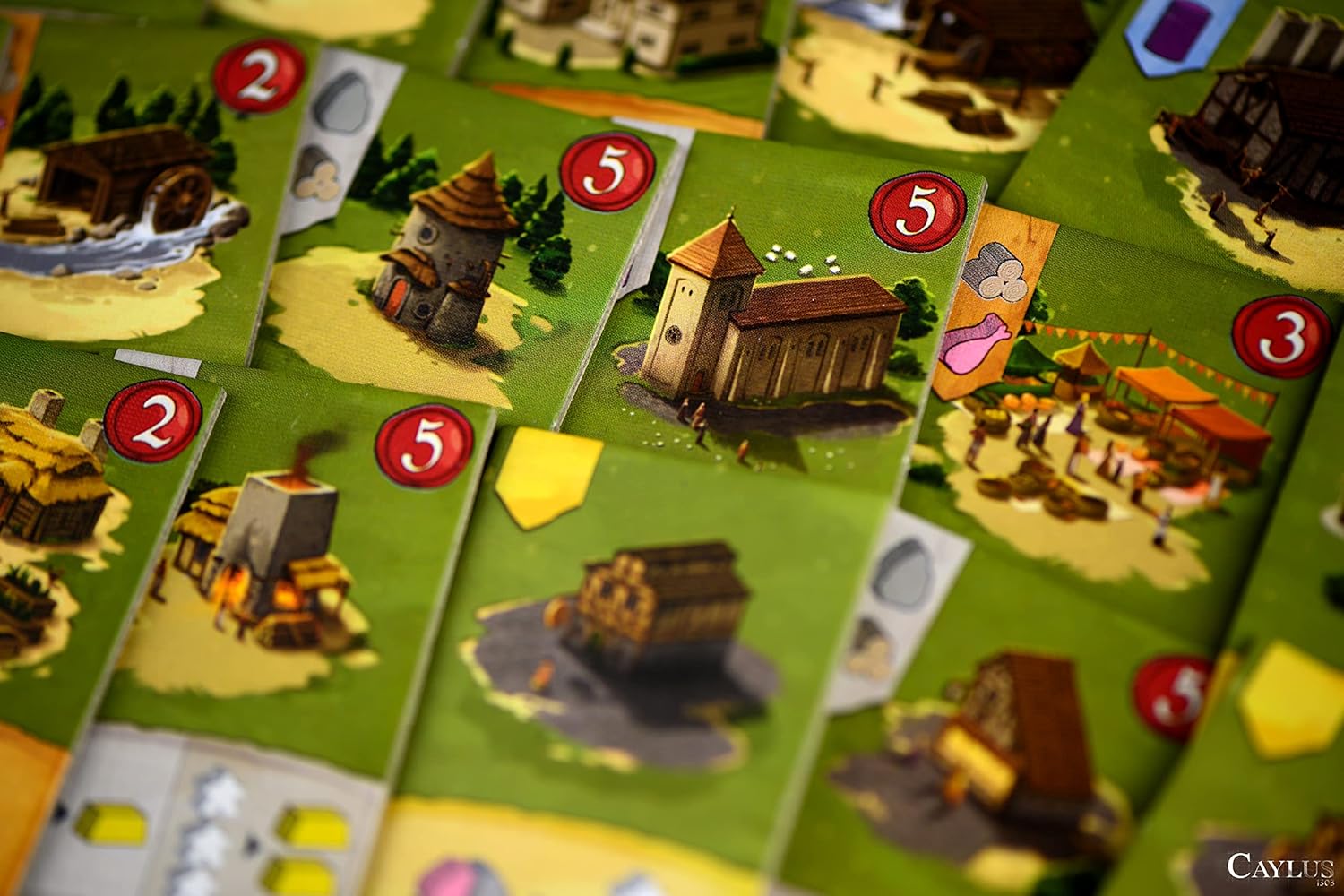
Worker placement emerged as a defining mechanic in modern board gaming through groundbreaking titles like Agricola (2007) and Caylus (2005). These games established a core system where players assign limited worker tokens to specific action spaces on the board, a concept that has evolved significantly over the years.
The traditional worker placement design follows a straightforward pattern:
- Players take turns placing workers on static board spaces
- Each space provides fixed resources or actions
- Workers return to their owners at the end of each round
- Available spots become blocked once occupied
Lords of Waterdeep (2012) refined this formula by introducing quest cards and building ownership, yet maintained the same fundamental structure. Players knew exactly what rewards they’d receive from each placement, creating predictable gameplay patterns.
According to BoardGameGeek’s game mechanics analysis, pre-2012 worker placement titles shared common limitations:
- Fixed action spaces with unchanging values
- Limited timing considerations beyond turn order
- Repetitive decision-making each round
- Minimal evolution of action spaces during gameplay
Game designer Martin Wallace noted in a 2011 Dice Tower interview: “Worker placement games needed something to shake up their predictable nature. Players were mastering optimal patterns too quickly, reducing long-term strategic depth.”
These design constraints set the stage for Tzolk’in‘s revolutionary approach to worker placement mechanics. The introduction of dynamic action spaces in Tzolk’in, which are influenced by the game’s unique mechanical elements such as the rotating gear system, marked a significant departure from traditional designs.
This shift towards more innovative mechanics is not just limited to Tzolk’in. There are numerous examples of games that have successfully incorporated unique mechanics into their design, enhancing player experience and strategic depth. Moreover, some titles like Steam: Rails to Riches have also explored the worker placement genre with a fresh perspective, further demonstrating the versatility and potential of this beloved mechanic in board gaming.
Introducing Tzolk’in’s Gear Mechanism: A Game-Changing Innovation
The heart of Tzolk’in beats through its mesmerizing gear system – a physical marvel of interlocked wheels that brings the Mayan calendar to life. Czech Games Edition crafted this centerpiece as five satellite gears orbiting around a central wheel, each representing different action spaces for resource gathering, construction, and worship.
Players face an intricate dance of timing and strategy. When placing workers on a gear’s lowest position, each subsequent turn rotates them clockwise to more powerful action spaces. A worker starting at the corn-gathering space might advance to collect wood, then stone, and ultimately reach precious gold – but only if left on the gear long enough.

This mechanical innovation creates delicious strategic tension:
- Early Retrieval vs. Maximum Power – Pull your worker too soon, you miss premium rewards. Wait too long, another player might claim the spot you needed
- Resource Management – Basic corn-gathering spaces help feed workers, while advanced positions unlock temple advancement and building opportunities
- Action Optimization – Skilled players coordinate multiple workers across different gears, creating efficient resource-gathering engines
The gear system transforms simple worker placement into a complex puzzle of temporal strategy. Each turn demands careful consideration: Do you place new workers, retrieve existing ones for immediate benefits, or let them ride the gears toward greater rewards? These decisions ripple through multiple rounds, creating deep strategic pathways unique to each game session.
In fact, this is a prime example of mastering the art of worker placement where players must navigate various strategies and pitfalls in modern board games.
Time-Based Strategy Redefining Planning in Eurogames
Tzolk’in transforms time into a tangible strategic resource, creating a distinct departure from traditional Eurogames. While games like Caylus or Stone Age focus on resource optimization and area control, Tzolk’in challenges players to master the rhythm of time itself.
The game’s mandatory worker retrieval system creates a pulsing cadence of decisions. Players must pull all workers from a gear when choosing to retrieve, generating intense moments of strategic calculation. This mechanic prevents the common Eurogame pattern of leaving workers in profitable spots indefinitely.
Player interaction takes on subtle dimensions through the gear system. The rotating spaces create shifting values and opportunities, where timing becomes a critical factor in blocking or enabling opponent strategies. As noted by Meeple Mountain:
“Tzolk’in‘s genius lies in how it creates player interaction without direct conflict. The gears force players to dance around each other’s timing, creating a fascinating spatial-temporal puzzle.”
The dynamic nature of action spaces introduces a fresh layer of strategy. A corn-producing space might yield 2 corn on turn one, but waiting three turns could provide 6 corn plus a valuable temple advancement. These evolving value propositions create compelling risk-reward scenarios unique to Tzolk’in‘s design.
Shut Up & Sit Down praised this innovation: “The rotating gears aren’t just a gimmick – they’re a brilliant mechanical representation of opportunity cost, creating meaningful decisions every single turn.”
Understanding Thematic Integration and Player Experience
Tzolk’in goes beyond just being a game with new mechanics; it beautifully combines gameplay with Mayan culture. The main feature of the game, the gear system, represents the Tzolk’in calendar used by the Maya for planning religious ceremonies and farming activities. Each smaller gear in the system represents different parts of Mayan life:
- Palenque: Agriculture and food production
- Yaxchilan: Resource gathering and hunting
- Tikal: Construction and architecture
- Uxmal: Noble actions and commerce
- Chichen Itza: Religious ceremonies and sacrifices
How Gears Connect to Mayan Beliefs
The way these gears turn in the game symbolizes the Mayan belief in time as something that repeats itself. Players don’t just collect resources in Tzolk’in – they experience what it’s like to be part of a Mayan community, doing things like growing corn, building temples, and making offerings to their gods.
Designer Daniele Tascini shared in a BoardGameGeek interview: “The challenge was creating mechanics that felt natural to the theme. The gear system wasn’t just about adding complexity – it needed to reflect how the Maya viewed time as a sacred, moving force.“
Making Choices Matter
This deep connection between theme and gameplay makes players’ decisions more significant within the story of the game. For example, when players move their workers on the Chichen Itza gear, they’re not just earning points – they’re actually making offerings to the gods and trying to synchronize their ceremonies with the movement of the sacred calendar.
Balancing Strategy with Cultural Accuracy
The crystal skulls mechanic is another example of how Tzolk’in combines theme and strategy. In this case, players have to place these valuable artifacts in certain temples at specific times, which reflects both the Maya’s knowledge of astronomy and also presents interesting tactical choices for players.
Influence on Future Game Designers and Subsequent Innovations in Worker Placement Games
Tzolk’in‘s revolutionary gear mechanism sparked a wave of innovation across the board gaming industry. Game designers recognized the untapped potential of incorporating time as an active gameplay element, leading to creative interpretations and mechanical homages in subsequent releases.
Several notable games draw direct inspiration from Tzolk’in‘s temporal mechanics:
- Nusfjord implements a rotating wheel system for fish stock management
- The Gears of Time adapts the concept with interlocking mechanical elements
- Pendulum embraces real-time elements through sand timers
- Trickerion features time-based action spaces that change value throughout gameplay
The impact extends beyond direct mechanical adaptations. Modern worker placement games increasingly incorporate dynamic spaces and temporal elements:
- Shifting action values between rounds
- Time-sensitive resource collection
- Progressive power scaling based on turn order
- Multi-round planning mechanics
Designer Martin Wallace notes on BoardGameGeek: “Tzolk’in showed us that worker placement doesn’t need to be static. The gear system proved players can handle complex timing decisions while maintaining strategic depth.”
This mechanical innovation has pushed designers to explore hybrid systems that blend traditional Euro-style resource management with dynamic action spaces. Games like Pipeline and Maracaibo demonstrate how Tzolk’in‘s influence encourages designers to challenge conventional worker placement formulas through temporal mechanics.
Critical Reception and Awards Recognizing Innovation in Tzolk’in Board Game
Tzolk’in: The Mayan Calendar received widespread acclaim from both critics and players, earning its place as one of the most innovative board games of the 2010s. The game received multiple prestigious nominations and awards:
- 2013 International Gamers Award – Nominated for General Strategy: Multi-player
- 2013 Golden Geek AwardsBest Strategy Board Game Nominee
- Most Innovative Board Game Winner
- Dice Tower Awards 2013 – Best Game Mechanisms Nominee
Critics praised the game’s unique approach to worker placement mechanics. Notable board game reviewer Tom Vasel of The Dice Tower highlighted:
“The gear system isn’t just a gimmick – it creates genuine tension and strategic depth that sets Tzolk’in apart from other worker placement games.”
The game maintains an impressive 7.9 rating on BoardGameGeek, with over 30,000 user ratings. Professional reviews consistently emphasized how the gear mechanism created a fresh take on resource management and action selection.
Game design experts recognized Tzolk’in’s influence on modern board game development. The Journal of Board Game Design cited it as a prime example of mechanical innovation driving thematic integration, noting how the physical gear system enhanced both strategic depth and player immersion in the Mayan theme.
This innovative approach is reminiscent of legacy and campaign-based board games, which have also evolved significantly over time, redefining gameplay experiences with their unique mechanics and immersive storytelling elements.
Conclusion
The Tzolkin board game is a shining example of innovation in tabletop design. Its gear mechanism shifted worker placement from a static system to a dynamic, evolving challenge. Tzolk’in’s influence continues to echo across modern board games, inspiring designers to experiment with time-based mechanics and rethink how physical elements can drive gameplay.
For players seeking deep strategic engagement, the Tzolkin board game delivers a blend of thoughtful planning and cultural immersion. The rotating gears demand foresight and patience, turning every move into a decision with long-term consequences. Whether you’re fascinated by its unique mechanics or the Mayan-inspired theme, Tzolk’in remains a landmark title that redefined what worker placement games could be.